
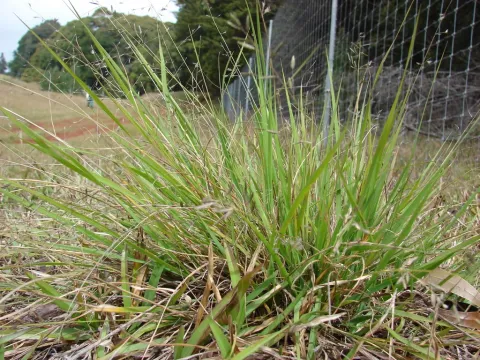
Lovegrass
Eragrostis
Lovegrass, scientifically known as Eragrostis, belongs to the Poaceae family. It is widely recognized as a versatile genus containing many species that are effectively utilized in agriculture for pasture and hay production due to their resilience.
What the section contains
 Black lovegrass
Eragrostis nigra Nees ex Steud.
Black lovegrass
Eragrostis nigra Nees ex Steud.
 Eragrostis amabilis
 (L.) Wight & Arn.
Eragrostis amabilis
Eragrostis amabilis (L.) Wight & Arn.
 Eragrostis elongata
Eragrostis elongata
Eragrostis elongata
 Eragrostis pilosa
 (L.) P. Beauv.
Eragrostis pilosa
Eragrostis pilosa (L.) P. Beauv.
 Eragrostis plana
 Nees
Eragrostis plana
Eragrostis plana Nees
 Eragrostis superba
 Peyr.
Eragrostis superba
Eragrostis superba Peyr.
 Lehmann lovegrass
Eragrostis lehmanniana Nees
Lehmann lovegrass
Eragrostis lehmanniana Nees
 Sand lovegrass
Eragrostis trichodes (Nutt.) A. W. Wood
Sand lovegrass
Eragrostis trichodes (Nutt.) A. W. Wood
 Stinkgrass
Eragrostis cilianensis (All.) Vignolo ex Janch.
Stinkgrass
Eragrostis cilianensis (All.) Vignolo ex Janch.
 Teff
Eragrostis tef (Zuccagni) Trotter
Teff
Eragrostis tef (Zuccagni) Trotter
 Weeping lovegrass
Eragrostis curvula (Schrad.) Nees
Weeping lovegrass
Eragrostis curvula (Schrad.) Nees
Lovegrass
Planting typically occurs in late spring when soil temperatures reach stable levels. The seeds are extremely fine, requiring a very shallow sowing depth of less than 2 centimeters to ensure successful germination and emergence.
Precision planting equipment is highly recommended to distribute the small seeds evenly across the field. Firming the soil before and after seeding is essential to create optimal contact between the seeds and the soil moisture.
The seedling stage is critical, requiring consistent moisture to establish a strong root system. While growth may appear slow initially, once established, the grass develops a deep root structure that aids in its survival.
Effective weed management during the establishment phase is vital. Keeping the field free of competitive species allows the young grass to develop adequately and eventually form a dense, productive sward.
Lovegrass is renowned for its excellent drought tolerance, thriving in arid and semi-arid conditions where other crops might fail. It performs exceptionally well on light-textured, sandy soils that are nutrient-poor.
The crop requires full sun exposure and does not tolerate shaded environments. It utilizes sunlight efficiently to produce biomass, making it an ideal choice for open, extensive pasture lands in warmer climates.
Regarding soil conditions, it is adaptable to various pH levels, typically ranging from 5.5 to 7.5. It demonstrates moderate salinity tolerance, which makes it a useful candidate for restoring degraded or saline-prone lands.
Fertilization should be tailored to soil test results, focusing on nitrogen to encourage leaf production and potassium to improve overall stress resistance. Proper drainage is essential to prevent root rot in wetter seasons.
Cold hardiness varies significantly among Eragrostis species; therefore, selecting the correct variety for your specific climatic zone is the most important factor in ensuring long-term stand survival.
Yields of Lovegrass are heavily dependent on soil moisture availability and management intensity. When managed correctly, it can produce high-quality forage that provides a reliable food source for livestock.
With adequate fertilization and water, the crop can support multiple harvests per year. The nutritional quality is highest during the early vegetative and boot stages, offering excellent protein levels for grazing animals.
Average dry matter yields vary significantly but often range between 5 to 15 tons per hectare in well-managed systems. Intensive irrigation can significantly increase these figures in low-rainfall areas.
The grass is highly valued for its role in soil conservation, effectively anchoring the soil with its deep root system while providing economic returns as forage. It is a dual-purpose solution for farmers.
Harvesting efficiency and timing play major roles in overall annual production. By following rotational grazing or strategic cutting schedules, farmers can optimize the lifespan and productivity of their fields.
Lovegrass is relatively resistant to many common cereal diseases, which helps reduce the need for intensive chemical interventions. However, maintaining good air circulation is crucial to prevent fungal issues.
Root rot and crown diseases can occur in areas with poor drainage or during prolonged periods of excessive rain. Improving site drainage is the primary method of preventing these types of issues.
Insect pests can sometimes cause localized damage, particularly during the seed formation stages. Regular field scouting is necessary to identify potential threats early and initiate appropriate control measures.
The presence of annual weeds during the establishment year remains the most significant threat to a successful stand. Pre-emergent control or manual removal is often necessary in the first few months.
Adopting an integrated pest management strategy helps maintain a healthy ecosystem, ensuring that the grass remains productive without relying solely on synthetic pesticides.
Hay harvesting should ideally take place just before or at the start of the flowering stage. At this point, the plant achieves the best balance between biomass volume and nutritional quality.
Mowing and drying processes must be managed carefully to ensure the hay cures properly without losing too many leaves. Keeping moisture levels below 18 percent is essential for safe storage and preventing spoilage.
If harvested for seed, the crop must be allowed to reach full physiological maturity. Direct combining is common, but extreme caution must be taken to minimize losses, given the very small size of the seeds.
Grazing management should focus on preventing overgrazing, which can weaken the plants and reduce their vigor. Rotating livestock between different paddocks ensures the grass has time to recover between grazing events.
Post-harvest care, including clearing excess debris, prepares the field for successful regrowth in the following season. Consistent maintenance ensures that Lovegrass remains a staple of the forage system for many years.