
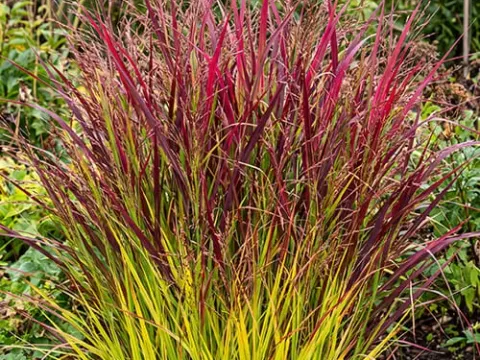
Flexuous millet
Panicum flexuosum
Flexuous millet (Panicum flexuosum) is a perennial grass species belonging to the Poaceae family. Native to tropical and subtropical regions of the Americas, this plant has adapted to diverse environmental conditions, showcasing robust growth patterns.
What the section contains
Flexuous millet
The plant features a strong root system, which helps in soil stabilization and efficient water uptake from deeper soil layers. Its stems are upright, and under optimal conditions, the plant can reach significant heights, making it a viable candidate for biomass production.
In agricultural practice, sowing is typically performed in the spring once the soil temperature is high enough to support germination. Consistent moisture in the upper soil profile during the first few weeks is crucial for establishing a healthy crop.
The recommended seeding depth is generally between 2 and 4 centimeters. Precise planting depth ensures uniform seedling emergence, which is essential for maintaining an even canopy across the entire field.
Due to its relatively slow initial growth rate, the crop requires careful weed management during the early stages of development. Controlling competition from opportunistic weeds significantly improves the overall stand density and final yield.
Flexuous millet thrives in sunny locations with well-draining soil. While it is adaptable to various soil types, it performs best in fertile, light loam soils that provide adequate nutrients and prevent waterlogging.
As a thermophilic species, Panicum flexuosum requires warm temperatures for optimal growth. The most favorable temperature range for its vegetative development is between 20 and 30 degrees Celsius, ensuring rapid biomass accumulation.
The plant possesses moderate drought tolerance but responds exceptionally well to irrigation during peak growth phases. Consistent water supply is necessary to maintain high forage quality and prevent physiological stress.
The ideal soil pH for this species is neutral to slightly acidic. Maintaining balanced soil chemistry is vital for nutrient uptake, particularly for elements like nitrogen and phosphorus, which drive leaf development.
Strategic fertilization, particularly with nitrogen-rich fertilizers, is highly recommended to stimulate regrowth after harvesting. Proper nutrient management keeps the plants vigorous and resilient against environmental stresses.
The primary use of flexuous millet is as a high-quality forage crop for livestock. Its foliage is palatable and nutrient-dense, making it an excellent source of dietary fiber for cattle and other herbivores.
With proper management, the crop can provide multiple harvests throughout the growing season. This high regrowth potential makes it a valuable asset for intensive farming systems focusing on sustainable biomass production.
Yield metrics, including green mass and dry matter, depend heavily on local soil fertility and climate. Implementing advanced agronomic practices can push the crop to achieve its maximum yield potential in professional settings.
Beyond forage, the plant is utilized in environmental conservation projects. Its dense root system and habit of spreading make it an effective tool for soil erosion control and land rehabilitation efforts.
Ongoing research into its yield potential suggests that Panicum flexuosum could play an even larger role in modern agricultural systems as a multipurpose grass species, provided that site-specific conditions are met.
Flexuous millet is susceptible to common grass pathogens, especially in humid and poorly ventilated environments. Fungal diseases such as rust and smut are the most prevalent threats to the crop's health.
Excessive humidity can encourage the development of leaf mold and other surface pathogens, which can reduce the quality of the harvested forage. Applying fungicides in a timely manner is a standard practice for large-scale operations.
Insect pests, including aphids and various species of grass-feeding flies, can cause significant damage by feeding on young stems and leaves. Early detection and intervention are critical to prevent widespread damage.
Integrated pest management, including crop rotation and the use of certified seed, is the best strategy for mitigating risks. These preventive measures significantly lower the need for heavy chemical treatments.
Monitoring the fields regularly allows for early detection of potential outbreaks. Maintaining a clean field environment also limits the survival of overwintering insects that could threaten future planting seasons.
Harvesting for forage purposes is best timed at the onset of the heading stage. At this developmental phase, the plant exhibits the optimal ratio of protein content to structural carbohydrates, maximizing nutritional value.
Hay production requires careful mowing and drying to ensure the preservation of leaves. Proper drying techniques are essential to prevent the degradation of nutrients and maintain the quality of the hay during storage.
When grown for seed, harvesting is delayed until the panicles reach full maturity. Using combines with adjusted settings minimizes grain shattering and damage, ensuring a high-quality seed crop for future use.
Post-harvest storage must occur in cool, dry, and well-ventilated conditions to prevent mold and the fermentation of the biomass. Correct storage ensures that the forage remains safe for consumption over long periods.
Efficient mechanization of the harvest process is key to high-output operations. Using modern mowers and conditioning equipment streamlines the drying process and improves the overall efficiency of the harvesting workflow.