
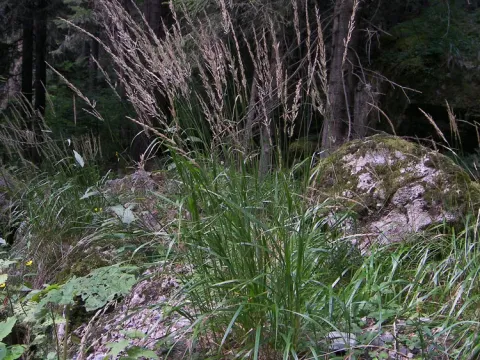
Flat-leaf bent
Agrostis planifolia
Flat-leaf bent (Agrostis planifolia) is a perennial grass species belonging to the Poaceae family. The optimal sowing period for this crop is early spring, when soil moisture is at its peak, or late summer, allowing the root system to establish sufficiently before the onset of winter frost.
What the section contains
Flat-leaf bent
The seeds of this species are remarkably small, necessitating shallow planting depths, typically between 1 to 2 cm. Precise sowing equipment is highly recommended to ensure uniform distribution and to avoid the over-density of seedlings, which can negatively impact overall development.
A seeding rate of 6 to 10 kg per hectare is standard for pure stands. Following the sowing process, rolling the soil is an essential agricultural practice to improve seed-to-soil contact, which significantly enhances germination rates and creates a stable foundation for early growth.
In cases where Agrostis planifolia is used for overseeding existing pastures, the soil should be lightly scarified beforehand. This reduction in competition from existing vegetation is crucial for the establishment of new plants, ensuring they receive adequate light and nutrient availability.
During the first year, flat-leaf bent focuses its energy on developing a strong root system and a dense sod. It is advisable to restrict livestock grazing during this phase to allow the plants to reach full maturity, thereby ensuring the long-term productivity and resilience of the meadow.
This grass species displays notable ecological plasticity and performs well in diverse soil environments. It thrives in high-moisture settings, such as river floodplains and low-lying meadow areas, where it demonstrates superior tolerance compared to many other common fodder grasses.
Flat-leaf bent is particularly well-suited for acidic soils, making it an excellent candidate for agricultural land reclamation in regions where traditional grasses may struggle. It grows effectively on both sandy loams and silt-rich soils provided there is adequate organic matter.
The species possesses inherent winter-hardiness, allowing it to withstand harsh climatic conditions in temperate zones. It is one of the first grasses to resume active growth after the snow melts, providing essential early-season biomass for grazing animals.
While the plant is adaptable to various light conditions, it shows the most vigorous tillering in open, sunny environments. In shaded conditions, the growth rate may slightly decelerate, necessitating careful management of grazing intensity to maintain a healthy density.
Agronomic management requires consistent nutrient delivery, particularly nitrogen, to stimulate vegetative biomass production. Regular soil testing and balanced fertilization help maintain high forage quality throughout the multi-year cycle of the crop's use.
The yield of flat-leaf bent is highly dependent on moisture availability and the quality of field management. Under optimal conditions and regular precipitation, the crop can produce multiple cuts per season, offering consistent fodder availability.
Flat-leaf bent is highly valued for its palatable, soft foliage, which is readily consumed by livestock. Hay produced from this species is nutrient-dense and aromatic, making it a premium choice for winter feed supplements for cattle and small ruminants.
This grass is suitable for both grazing and hay production systems. Its robust root system allows it to tolerate repeated grazing pressure well, and its rapid regrowth potential ensures that pastures recover quickly after livestock rotation.
For seed production, specific areas should be designated where the grass is allowed to mature without mowing. Seed yields can vary, so monitoring the panicle development is essential to prevent significant losses due to natural seed shattering during the ripening phase.
The longevity of a productive stand typically ranges from 5 to 7 years. Beyond this timeframe, overseeding or crop rotation may be required, as natural competition and changes in soil conditions can gradually lead to a decrease in biomass production.
Like many grasses, Agrostis planifolia can be susceptible to fungal diseases such as rusts and powdery mildew, especially during periods of prolonged humidity and poor air circulation within the stand. Maintaining proper field drainage is a primary preventive measure.
Pests such as cereal flies and aphids can affect young crops, potentially reducing the overall stand density. Integrated pest management strategies, such as timing the sowing to avoid peak pest activity, are highly effective in protecting the crop.
Nematodes may pose a challenge in chronically waterlogged soils, impacting root vigor. Crop rotation and ensuring the use of high-quality, certified seeds help mitigate the risks associated with these soil-borne threats.
Invasive weeds pose a competitive threat, particularly during the first months of the crop's life. Once the sod is established, flat-leaf bent becomes very effective at suppressing most annual weeds, although perennial species may still require spot management.
To minimize phytosanitary risks, post-harvest field hygiene—such as removing heavy crop residues—is recommended. This practice disrupts the life cycle of many common pathogens, leading to healthier growth in the following season.
The ideal time for harvesting flat-leaf bent for hay is at the very beginning of the heading phase. Harvesting at this stage ensures the highest protein concentration and digestibility, resulting in superior quality forage for livestock.
When used for pasture, rotational grazing is the most efficient method to maintain stand quality. Keeping the sward at a height of 5–7 cm prevents overgrazing and encourages the grass to produce new tillers, maintaining the vigor of the root system.
After mowing, the green mass should be dried quickly to preserve its nutritional value and bright green color. Proper aeration and turning of the cut grass are necessary to prevent the formation of mold and ensure long-term storage stability.
For seed harvesting, combine harvesters should be adjusted with low drum speeds to avoid damaging the delicate seeds. Timing is critical; the harvest must be completed when seeds are fully ripe but before significant shattering occurs in the field.
Post-harvest management, including light fertilization, can encourage secondary growth before winter sets in. This late-season boost is vital for ensuring that the grass has enough stored energy to survive the winter and start strongly in the spring.