


Reference · Crops
Foxtail
Alopecurus L.
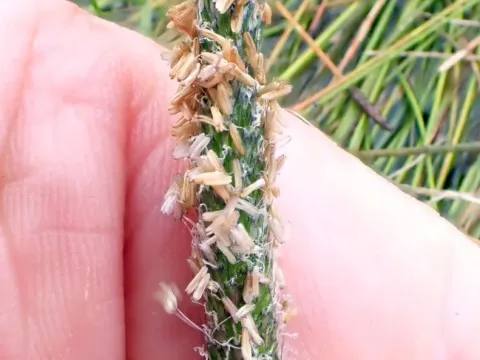
Foxtail, specifically the meadow foxtail (Alopecurus pratensis), is a perennial grass of the Poaceae family that initiates growth very early in the spring. The ideal sowing period is early spring or late summer, allowing the seeds to benefit from adequate moisture for proper establishment.
5
items
What the section contains
Marketplace
Products in this section · 12


Shogun 100
F.A.GAN Chemical Manufacturers Ltd. Israel, member
Herbicides
1
0
1 offer
96.5 €per pack
Buy
Foxtail
Seeds should be sown at a shallow depth, as they have limited energy reserves for deep emergence. Precision seeders are recommended to ensure uniform distribution and optimal plant density across the field.
It is commonly integrated into permanent pasture mixtures alongside clover or other fescue species. This integration improves the overall protein content of the forage and enhances the soil nitrogen profile.
When grown for seed production, wider row spacing is preferred to improve light penetration and airflow. This practice reduces the risk of lodging during the reproductive stage of the plant.
Establishment is relatively slow during the first year, requiring diligent weed management to ensure that the seedlings are not outcompeted by aggressive weeds in the early stages.
Foxtail is a mesophytic plant with high moisture requirements, making it an excellent choice for river floodplains. It exhibits remarkable tolerance to temporary waterlogging, which is a major agricultural advantage.
The crop thrives in fertile, loamy, or clay-heavy soils rich in humus. It performs poorly in drought-prone areas or light sandy soils, where its lack of deep root resilience leads to significantly lower yields.
The plant is highly frost-hardy and survives harsh winters without winterkill. Its ability to withstand early spring cold snaps makes it highly suitable for temperate and northern climatic regions.
Soil pH should ideally be neutral or slightly acidic. On more acidic soils, liming is recommended to improve the availability of essential nutrients and enhance the development of the root system.
It is highly responsive to nitrogen fertilization. Splitting nitrogen applications in early spring and after the first hay cut can significantly boost biomass production throughout the growing season.
The average green mass yield of foxtail ranges between 15 and 30 tonnes per hectare, depending on moisture availability. In floodplain ecosystems, these figures can be significantly higher with proper management.
Hay production typically yields 4 to 6 tonnes per hectare. Foxtail is highly valued in livestock nutrition due to its excellent palatability and nutritional profile, especially during the early heading stage.
Seed yields are generally moderate, ranging from 300 to 600 kilograms per hectare. Careful timing is required during harvest to prevent the seeds from shattering, as the heads are prone to dropping seeds when fully ripe.
Foxtail is a long-lived perennial, often remaining productive for 5 to 10 years in a permanent meadow. This longevity provides economic stability for forage production systems.
The regrowth rate after harvesting or grazing is rapid, provided that soil moisture is sufficient. This makes it a reliable component in managed grazing rotations for dairy and beef cattle.
Rust diseases are the most common pathogens, affecting the foliage during periods of high humidity. Dense stands are particularly susceptible, so maintaining appropriate plant density is crucial for disease management.
Powdery mildew can occur in stagnant air conditions within thick canopies. Implementing timely hay cuts and avoiding over-fertilization can help manage the prevalence of this fungal disease.
Pests such as grass flies and aphids can damage the reproductive heads and stems. Integrated pest management (IPM) strategies, including monitoring and biological control, are recommended when thresholds are exceeded.
Helminthosporium leaf spot causes discoloration and necrosis of leaf tissue. Preventive measures include using high-quality certified seeds and ensuring debris from previous seasons is properly managed.
Proper grazing rotation is essential to prevent physiological stress, which weakens the plant's natural immunity against common fungal and bacterial infections.
Hay harvesting should ideally occur during the heading phase to balance yield with nutritional quality. Harvesting before the seeds set ensures that the protein content remains high for livestock feed.
When harvesting for seed, timing is critical. Harvesting should be performed when the upper portion of the seed head turns a light brown, using a combine harvester set to minimize mechanical loss.
Because the stems of foxtail are succulent, rapid drying is necessary after cutting. Using hay turners facilitates the drying process and helps preserve the quality of the cut material.
Rotational grazing is the preferred management style for pastures to allow the plants sufficient recovery time. This sustains root vigor and ensures the longevity of the stand.
The final harvest of the season should be completed well before the first hard frost to allow the plant to store adequate carbohydrates in its rhizomes for overwintering.