
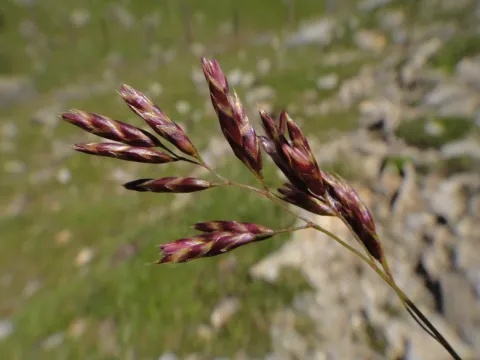
Four-flowered fescue
Festuca quadriflora
The four-flowered fescue (Festuca quadriflora) is a member of the Poaceae family. This perennial grass is typically found in alpine and subalpine regions, having evolved to thrive in high-altitude environments characterized by thin soils and fluctuating temperatures.
What the section contains
Four-flowered fescue
The species exhibits remarkable cold tolerance and adaptation to harsh climatic conditions. Its physiology allows it to remain productive in areas where other forage grasses might fail, making it an excellent candidate for permanent pasture establishment in challenging terrains.
In terms of soil requirements, this fescue prefers well-drained, rocky, or loamy soils. It is highly sensitive to waterlogging and poor drainage, which can impede root development and increase susceptibility to rot. Ensuring proper site selection is key to achieving optimal biomass yield.
Botanically, Festuca quadriflora features dense tufts and narrow, tough foliage that withstands trampling by livestock. The plant's deep root system is highly efficient at binding soil particles, which helps in land stabilization and the prevention of erosion on steep landscapes.
From an agricultural standpoint, it is primarily used as a forage crop. Its ability to regrow rapidly after grazing, combined with a balanced nutritional profile, makes it a valuable species for improving the productivity and ecological resilience of grasslands.
Pathogenic fungi, particularly rusts and powdery mildew, pose a significant risk when high humidity levels persist. Maintaining adequate plant spacing and ensuring good airflow across the field are the primary non-chemical strategies for disease management.
Pest pressure from aphids and grass flies can occasionally affect plant vigor during the early stages of growth. Integrated pest management, including regular field monitoring and maintaining natural predator populations, helps keep these pest levels under control.