
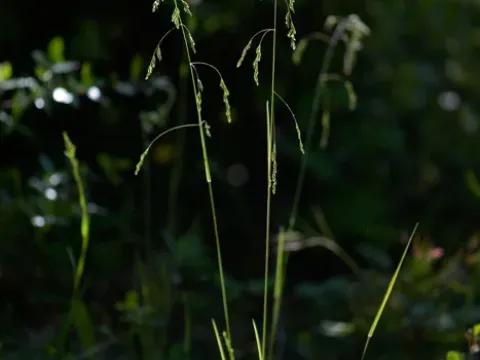
Flaccid bluegrass
Poa flaccidula
Flaccid bluegrass (Poa flaccidula) is a perennial herbaceous plant belonging to the Poaceae family. This species is characterized by a loosely tufted growth habit and thin, often drooping stems, which accounts for its common and scientific names.
What the section contains
Flaccid bluegrass
Its natural distribution range encompasses mountainous and forested regions of East Asia, including the Russian Far East, China, and Japan. The plant typically thrives in moderately moist and shaded areas, commonly found along forest edges and in river floodplains.
For successful cultivation, the crop requires loamy or sandy loam soils with adequate drainage and sufficient organic matter. It is notable for its high frost tolerance and ability to adapt to cool climate conditions.
In field environments, flaccid bluegrass is sensitive to prolonged waterlogging and stagnant water, making it necessary to avoid low-lying areas without proper drainage. The optimal pH level for this species typically falls within the slightly acidic to neutral range.
The culture exhibits strong competitiveness against weeds during the early stages of vegetation, although thorough soil preparation is essential to ensure uniform seed germination and balanced development of the grass stand.
Agricultural use of flaccid bluegrass is primarily focused on the establishment of meadows and pastures in temperate regions. The foliage is highly leafy and palatable, making it a valuable component of both natural and seeded grasslands.
The green mass contains a significant amount of protein and essential minerals that support healthy growth in livestock. The overall forage yield is directly influenced by soil fertility and the application of nitrogen-based fertilizers.
When included in seed mixtures, flaccid bluegrass helps to improve turf structure, which effectively mitigates soil erosion on sloping lands. Its ability to regrow after mowing allows for multiple harvests throughout a single growing season.
Seed production of the species is moderate, requiring precise timing of the harvest to minimize potential losses from seed shattering. High-quality seed ensures the longevity of the stand and maintaining optimal plant density over several years.
The overall value of this crop lies in its ability to retain nutritional quality for an extended period, making it suitable for both fresh grazing and the production of high-quality forage hay.