
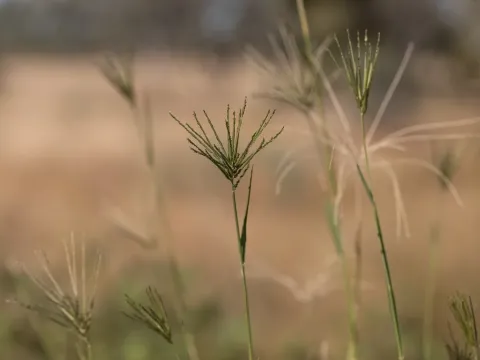
Fingergrass
Leptochloa digitata
Fingergrass (Leptochloa digitata) is a perennial grass belonging to the Poaceae family. It is recognized for its remarkable adaptability to various environmental conditions, particularly within tropical and subtropical regions where it thrives under warm temperatures.
What the section contains
Fingergrass
This crop prefers sunny locations and is highly tolerant of saline and periodically waterlogged soils, making it an excellent choice for marginal agricultural lands. Its ability to withstand suboptimal soil conditions contributes to its utility in difficult landscapes.
The root system of Leptochloa digitata is deep and fibrous, which helps to stabilize soil structure and prevent erosion. This characteristic makes it highly valuable for land reclamation projects and maintaining stability in riverine habitats.
Fingergrass grows best in well-drained but moisture-retentive soils. While it can handle short-term drought once established, its productivity increases significantly with consistent moisture availability during the active growing season.
Botanically, it is identified by its distinct digit-like inflorescences. The grass forms dense clumps that act as a natural barrier to weed development, effectively outcompeting common invaders in pasture environments.
The primary agricultural use of fingergrass is for forage production. It exhibits a rapid regrowth rate after mowing or heavy grazing, allowing for multiple harvests within a single growing season under optimal management.
The nutritional quality is highest during the early vegetative stage, making it an ideal choice for livestock feed. Farmers often utilize it as a component in mixed pasture systems or as a source of high-quality hay for cattle and small ruminants.
Yield performance is highly correlated with nutrient availability, specifically nitrogen levels in the soil. Under irrigation, Leptochloa digitata can produce significant amounts of biomass, comparable to other high-yielding perennial grasses.
Beyond its feed value, this grass is increasingly used for soil restoration and as a ground cover to rehabilitate degraded pastures. Its capacity to improve soil organic matter content makes it a staple for sustainable forage farming.
Furthermore, its role in phytoremediation is noteworthy. By extracting excess salts from the soil, it contributes to the long-term health of agricultural plots in arid regions, preventing the degradation caused by secondary salinization.
Fingergrass is naturally robust, but it can be susceptible to fungal diseases such as leaf rust, especially in humid and stagnant air conditions. Proper management of canopy density is crucial to ensure adequate airflow through the field.
Pest pressure from aphids and leafhoppers represents a primary threat to crop health. These insects feed on the plant's sap, which can weaken the vigor of the stand and potentially facilitate the transmission of viral diseases.
Integrated Pest Management (IPM) is the recommended approach for dealing with these threats. Encouraging beneficial predatory insects in and around the field can effectively control aphid populations without chemical interference.
Cultural practices, such as routine mowing, help mitigate disease spread by removing older or infected plant tissues. Keeping the grass in an active growth phase is the best defense against many localized plant pathogens.
Field monitoring is essential, particularly during the flowering stage when the plant is most vulnerable to locusts or other grass-feeding herbivores. Early detection allows for targeted interventions that preserve the overall yield.