
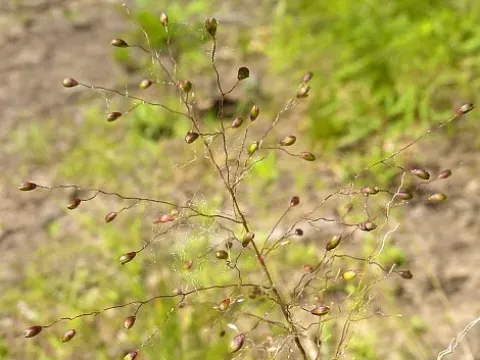
Forked panicgrass
Panicum dichotomum
Forked panicgrass (Panicum dichotomum) is a perennial grass species belonging to the Poaceae family. Native to North America, this plant is naturally distributed across various habitats, ranging from wooded areas to open meadows and prairie environments.
What the section contains
Forked panicgrass
The plant exhibits high adaptability to various soil types, preferring well-drained, fertile substrates. It is known for its ability to tolerate mild drought conditions, making it a resilient component of natural pastures and grassland ecosystems.
Botanically, Panicum dichotomum is recognized by its unique branched stem morphology, which gives rise to its common name. The plant develops a dense basal rosette of leaves early in the season, followed by the development of secondary flowering stalks.
In agricultural settings, it is primarily utilized as forage. The plant's ability to regenerate growth after grazing or harvesting makes it a valuable species for intensive pastoral farming and hay production in suitable climates.
Environmental requirements include a temperate climate with adequate light levels. While the plant can withstand partial shade, it achieves the highest biomass yields when grown in full sun conditions with regular water availability.
Forked panicgrass can be susceptible to various fungal pathogens, especially leaf rusts and smuts, particularly in regions with high humidity or poor air circulation within the stand.
Pests such as aphids and leafhoppers are the most common insects that feed on the foliage, potentially reducing the overall quality and nutritional value of the forage if populations are not managed.
Preventive agrotechnical measures, such as proper crop rotation and avoiding over-seeding, are essential to minimize the risk of disease outbreaks and ensure a healthy canopy development.
Soil-borne threats are generally minimal but may include root rot if the land is poorly drained or subject to waterlogging, which limits the plant's root development and overall vigor.
Effective monitoring and integrated pest management are recommended to maintain high yield levels and ensure the long-term sustainability of the pasture or meadow plot.