
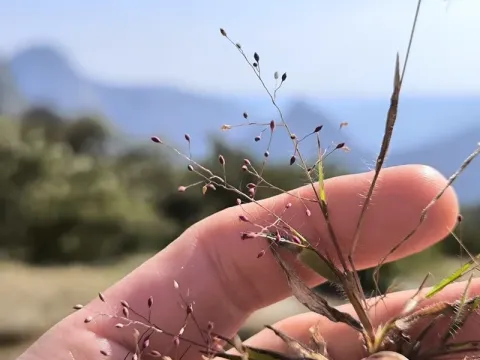
Dark-blooded millet
Panicum atrosanguineum
Dark-blooded millet is a thermophilic annual cereal that requires well-warmed soil to ensure successful germination and early vigor.
What the section contains
Dark-blooded millet
Sowing should ideally take place when soil temperatures consistently reach 12 to 15 degrees Celsius at planting depth.
In most regions, this timing typically aligns with the late spring period, once the danger of late frost has passed completely.
The seeds should be sown at a shallow depth, usually around 2 to 3 centimeters, to allow for quick emergence and root establishment.
Maintaining an appropriate planting density is crucial to ensure that each plant has enough access to sunlight and soil nutrients.
Native to African regions, this species is highly adapted to arid environments, showing significant drought tolerance and heat resistance.
The plant thrives in well-drained, light-textured soils such as sandy or loamy sands, avoiding heavy or waterlogged ground conditions.
Optimal growth is achieved under direct sun exposure; the crop is highly sensitive to shading and requires full solar radiation to reach maturity.
Preferred temperatures for development range from 25 to 30 degrees Celsius, making it an excellent choice for warmer agricultural zones.
Basic agronomic needs include periodic soil aeration and strict management of weed competition during the initial vegetative stages.
The crop is susceptible to various fungal pathogens, particularly in conditions where air circulation is poor or soil moisture is excessive.
Pests such as millet flies and various stem-boring insects may cause damage to the vegetative tissue during the shooting and heading phases.
Smut diseases represent a significant threat to yields, potentially destroying the inflorescences and reducing the overall quality of the grain.
Integrated pest management, including seed treatments and crop rotation, is essential to mitigate the risk of large-scale infestations.
Field scouting should be performed regularly to identify potential problems early and implement targeted control measures as needed.
Harvesting dark-blooded millet requires careful timing, as the seeds are prone to shattering if left standing in the field for too long.
A two-stage harvesting process is generally recommended, starting with windrowing the crop to allow for even ripening of the panicles.
The harvest should commence when the seeds in the central portion of the panicle achieve a uniform color and firm consistency.
Immediate post-harvest processing is required to clean the grain of chaff and lower its moisture content for safe long-term storage.
Storage facilities must be kept dry and well-ventilated to prevent the growth of mold and maintain the viability of the harvested crop.