
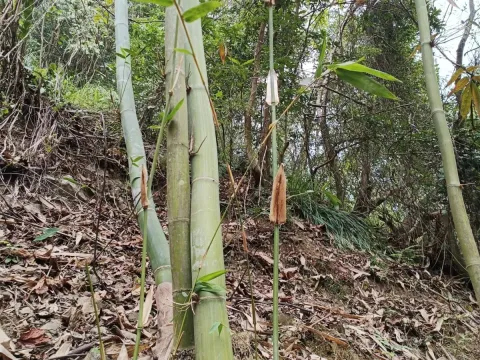
Dendrocalamus
Dendrocalamus Nees
Dendrocalamus is a genus of giant tropical clumping bamboos belonging to the Poaceae family. Known for their massive culms, some species are considered the largest bamboo plants in the world, with stems reaching significant heights and diameters.
What the section contains


Dendrocalamus
The plant is native to South and Southeast Asia, flourishing in tropical monsoon climates. It requires high temperatures and consistent rainfall throughout the year, as it lacks cold tolerance and enters dormancy or dies back in freezing conditions.
Cultivation requires deep, well-draining soils rich in organic matter. The plants thrive in environments with high humidity and require intensive management to maintain soil fertility and adequate moisture during the establishment phase.
Agricultural practice involves regular irrigation and mulching to retain soil moisture. As a nutrient-demanding crop, bamboo requires frequent applications of nitrogen-rich fertilizers to support the rapid growth rate of new shoots during the rainy season.
Economic applications are vast: the timber is highly valued in construction, scaffolding, furniture making, and as a primary raw material for industrial paper pulp and sustainable flooring solutions.
Harvesting typically occurs when the culms reach maturity, usually between 3 to 5 years after the initial planting, depending on the specific species and the intended use of the raw material.
Selective harvesting is the preferred method, where only mature culms are removed, leaving younger stems to continue the expansion of the clump and ensure the sustainable productivity of the plantation over time.
The process is often manual, utilizing specialized saws or machetes to prevent damage to the rhizome system and the emerging shoots, which are essential for the next season's growth cycle.
Post-harvest handling is critical to ensure wood quality; the bamboo must be treated to remove starch and sugars to prevent infestation by powderpost beetles and other boring insects during storage.
Timely harvesting helps in maintaining the clump's health by removing aging or over-congested stems, thus facilitating better light penetration and air circulation for the younger, more vigorous parts of the plant.