
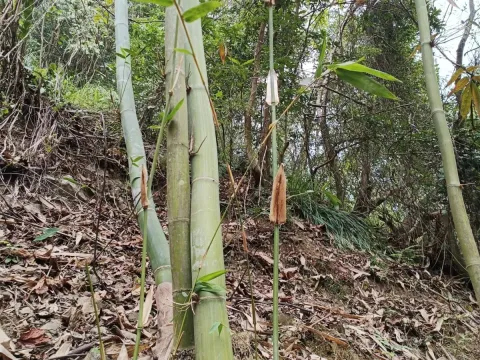
Dendrocalamus
Dendrocalamus
Dendrocalamus is a genus of giant, woody-stemmed grasses belonging to the family Poaceae. This perennial plant is renowned for its exceptional growth rate, forming dense clumps with culms that can reach diameters of 20 to 30 centimeters.
What the section contains
 Dendrocalamus barbatus
Dendrocalamus barbatus
Dendrocalamus barbatus
 Dendrocalamus calostachyus
Dendrocalamus calostachyus
Dendrocalamus calostachyus
 Dendrocalamus giganteus
Dendrocalamus giganteus
Dendrocalamus giganteus
 Dendrocalamus hamiltonii
Dendrocalamus hamiltonii
Dendrocalamus hamiltonii
 Dendrocalamus latiflorus
Dendrocalamus latiflorus
Dendrocalamus latiflorus
 Dendrocalamus longispathus
Dendrocalamus longispathus
Dendrocalamus longispathus
 Dendrocalamus membranaceus
Dendrocalamus nudus
Dendrocalamus nudus
Dendrocalamus membranaceus
Dendrocalamus membranaceus
Dendrocalamus nudus
Dendrocalamus nudus
 Dendrocalamus pendulus
Dendrocalamus sericeus
Dendrocalamus sericeus
Dendrocalamus pendulus
Dendrocalamus pendulus
Dendrocalamus sericeus
Dendrocalamus sericeus
Dendrocalamus
Native to the tropical and subtropical regions of Southeast Asia, this crop requires a warm and humid climate to thrive. It performs best in temperatures ranging from 15 to 20 degrees Celsius year-round with abundant rainfall.
The crop has specific requirements regarding soil fertility. It thrives in deep, well-drained, loamy soils rich in organic matter. Despite its high water needs, the plant is sensitive to waterlogging, making proper soil drainage a critical factor for success.
Propagation is primarily achieved through vegetative methods, such as culm cuttings or rhizome division. Propagation by seeds is rarely practiced due to the unpredictable and infrequent flowering cycles, which may occur only once every several decades.
Agricultural maintenance involves careful management of clump density. To ensure adequate light penetration and air circulation, regular pruning of old, damaged, or dry culms is necessary to stimulate the growth of new, healthy shoots.
Dendrocalamus is highly valued for its commercial use due to the extreme strength and durability of its wood. The culms are widely used in construction for house frames, high-end furniture, flooring, and as structural components in civil engineering projects.
Young shoots of several species, such as Dendrocalamus asper, are edible. They are rich in dietary fiber and essential minerals, serving as a staple culinary ingredient in many Asian countries after proper boiling or processing.
The pulp and paper industry utilizes the fibers of Dendrocalamus to produce high-quality paper. The long, sturdy fibers provide the finished product with superior tensile strength and flexibility compared to traditional wood pulps.
The plant has immense potential for landscaping and environmental restoration. Due to its rapid biomass accumulation, Dendrocalamus plantations are excellent for carbon sequestration and preventing soil erosion on steep hillsides.
Yield depends heavily on the intensity of agricultural practices. With consistent irrigation and balanced fertilization, mature plantations can produce an annual harvest of 20 to 30 tons of high-quality woody biomass per hectare.
Common pests affecting Dendrocalamus include various insects that feed on the culms and leaves. Bamboo mites and specific moth larvae can cause significant damage, reducing the plant's photosynthetic efficiency and overall vigor.
Fungal diseases, including leaf spot and rust, frequently occur in high-humidity environments with poor air movement. These infections spread rapidly in overly dense plantations, necessitating regular thinning and sanitation.
Root rot is the most severe pathology associated with improper soil drainage. Stagnant water around the rhizome system creates an ideal environment for pathogens that can eventually lead to the collapse of entire clumps.
In certain regions, rodents can pose a threat by feeding on young, tender bamboo shoots. Protecting young plantations often requires the installation of fencing and ongoing monitoring to prevent significant damage.
- Regular field inspections for pest presence.
- Prompt removal and disposal of infected plant material.
- Maintenance of optimal spacing to ensure airflow.
- Implementation of integrated pest management (IPM) strategies.