
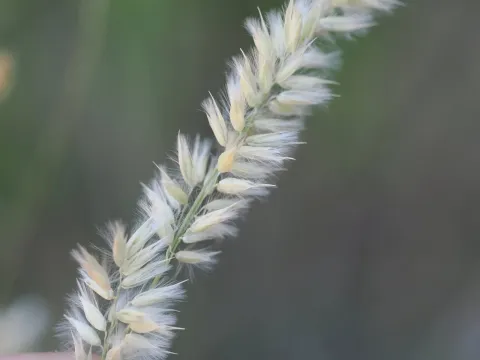
Hairy melick
Melica ciliata
Hairy melick (Melica ciliata) is a perennial grass species belonging to the Poaceae family. It is widely distributed across Europe and parts of Asia, frequently found in dry grasslands and rocky outcrops.
What the section contains
Hairy melick
The plant is highly prized for its exceptional drought tolerance. It thrives in conditions where more demanding forage crops would fail, making it a reliable component for pastures in arid climates.
Soil requirements are relatively low; Melica ciliata grows well on poor, stony, and calcareous soils. This adaptability makes it an excellent candidate for land reclamation and soil stabilization projects.
Like many steppe grasses, it requires full sun for optimal growth. It is intolerant of heavy shade, which significantly reduces biomass production and limits the plant's long-term survival in dense vegetation.
It displays high cold hardiness, easily surviving harsh winter conditions. Its early spring growth contributes to a longer grazing season, providing valuable forage when other species are still dormant.
Sowing should take place in early spring as soon as the soil is workable. Early establishment is crucial for the seedlings to utilize spring moisture before the onset of summer heat.
Late autumn sowing is also a viable option in temperate regions, as the seeds undergo natural stratification, often leading to better emergence in the following spring.
Given the small seed size, shallow sowing at a depth of 1–2 cm is necessary. Firming the soil after sowing using rollers is a recommended practice to ensure optimal moisture transfer for germination.
The standard seeding rate is 10–15 kg per hectare. Proper calibration of seeding equipment is important to achieve an even distribution and avoid excessive plant density in the early stages.
Weed control is essential during the establishment year. As the seedlings develop relatively slowly, they can be easily outcompeted by aggressive weeds, requiring timely mechanical or chemical intervention.
Hairy melick is primarily utilized for extensive grazing and hay production. While it does not provide the massive yields of high-input grasses, its nutritional quality is consistent during early growth stages.
For haymaking, timing is critical; harvesting should occur before the plants reach full maturity. Once the plants begin to set seed, their digestibility and protein content drop sharply.
The grass regrows well after grazing, provided that the stocking rate is managed effectively. Rotational grazing is recommended to ensure the long-term productivity and health of the sward.
Nutritionally, it serves as a balanced forage source for ruminants, particularly in mountainous and steppe regions where soil fertility is limited and intensive farming is not viable.
Under irrigation, yield increases significantly; however, the plant's economic value is highest when it is managed in dryland conditions where its drought-resistance provides a competitive advantage.
Hairy melick is notably resistant to many common cereal diseases. Its wild-type heritage confers a high level of natural immunity to rust and smut pathogens that frequently affect cultivated grasses.
Pest pressure is generally low, although grass flies may occasionally damage seedlings during the early spring. Monitoring during the germination phase can help determine if corrective action is needed.
In regions with high cereal production, some generalist insects may colonize Hairy melick fields. Integrated pest management strategies are usually sufficient to mitigate potential yield losses.
Excessive moisture during late stages of development can lead to fungal issues in the seed heads. Therefore, timely harvesting of seed crops is essential to maintain seed quality and quantity.
Overall, the crop is robust and requires minimal intervention. Most agronomic failures are linked to improper soil preparation or excessive competition from weeds rather than pest or disease outbreaks.