
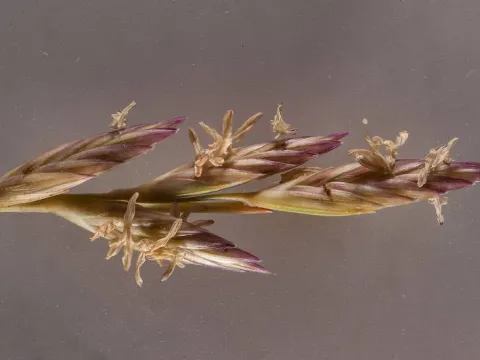
Halopyrum
Halopyrum
Halopyrum is a monotypic genus of perennial grasses belonging to the Poaceae family. The only recognized species, Halopyrum mucronatum, is a highly specialized halophyte that thrives in environments characterized by extreme soil salinity and coastal exposure.
What the section contains

Halopyrum
The native distribution of this plant includes the coastal belts of the Indian Ocean, stretching from East Africa and the Arabian Peninsula to India and Sri Lanka. It is a dominant species in coastal dune ecosystems, where it functions as a primary sand stabilizer.
From a botanical perspective, the plant is characterized by a robust, creeping rhizome system that anchors the plant in loose, sandy, and salt-affected substrates. It has evolved specific anatomical adaptations, such as salt-secreting glands, which allow it to maintain physiological homeostasis in saline conditions.
Regarding environmental requirements, Halopyrum thrives in high-light, high-temperature climates. It does not require conventional irrigation with fresh water and is capable of surviving long periods of drought, making it an ideal candidate for restoring degraded saline landscapes in tropical and subtropical zones.
The main agricultural interest in this crop lies in its potential for phytoremediation and soil conservation. Furthermore, it serves as a source of biomass for grazing animals in arid regions where conventional forage crops fail to survive due to high salinity levels in the root zone.