
Hackelochloa
Hackelochloa
Hackelochloa is a genus of annual grasses belonging to the Poaceae family. Often associated with the Rottboellia genus, its most prominent species, Hackelochloa granularis, is found extensively throughout the tropical and subtropical regions of Africa and Asia.
What the section contains

Hackelochloa
This crop thrives in warm and humid climatic conditions, which dictates its primary cultivation area. The plant adapts well to various soil types, though it performs best in well-drained, fertile soils with a neutral pH, ensuring robust development during the growing season.
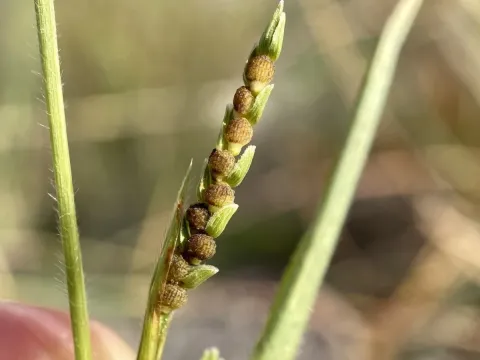
Botanically, Hackelochloa is recognized by its branched stems and distinctive granular inflorescences. These unique grain-like glumes on the spikelets serve as a primary taxonomic feature that sets the genus apart from other members of the Andropogoneae tribe.
In agricultural systems, the plant is often managed as a forage resource for livestock. While sometimes considered a weed in intensive cropping systems, its high nutritional value in the early stages of growth makes it a beneficial component of tropical pastures.
Agrotechnical management requires consistent soil moisture, as the crop is vulnerable to prolonged dry spells. Optimal growth temperatures range between 25 and 30 degrees Celsius, limiting its natural distribution to warmer latitudes where such conditions are stable.
The primary threats to this crop include various fungal diseases that proliferate in humid environments. Rust and several forms of smut are the most common pathogens, specifically targeting the inflorescences and foliage, which can significantly reduce forage quality.
Pests affecting Hackelochloa include typical tropical grass insects such as lepidopteran larvae, which feed on the tender aerial biomass. Additionally, sucking insects like aphids frequently infest the crop, leading to stunted growth and secondary viral infections.