
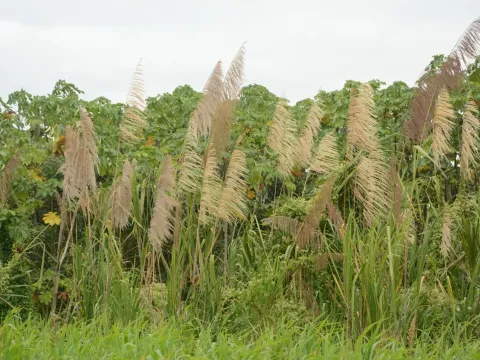
Gynerium
Gynerium
Gynerium is primarily propagated through vegetative means, involving the division of rhizomes or the rooting of stem cuttings. The optimal planting period is the beginning of the rainy season when the soil is warm and adequately hydrated.
What the section contains

Gynerium
Spacing between plants is crucial during planting because the crop possesses a vigorous root system and expands rapidly. Propagules are planted 10-15 cm deep, ensuring a strong connection between the roots and the substrate.
For commercial plantations, it is preferable to use young offshoots, as they exhibit higher survival rates. Fields must be cleared of weeds before planting to allow young plants to develop successfully during the initial months.
Access to water is a significant factor during planting, as the culture is highly sensitive to substrate moisture levels. In regions with irregular rainfall, supplemental irrigation is recommended immediately following the planting process.
Rooting of cuttings can also be performed in specialized nurseries under shade, which facilitates the production of high-quality planting material for large-scale operations in the following season.
Gynerium, belonging to the Poaceae family, is a typical representative of the flora found in the tropical and subtropical regions of the Americas. This perennial grass thrives in open areas with intense solar radiation.
The plant has specific soil requirements: fertile, well-drained, yet moisture-retentive alluvial soils are optimal. The crop is capable of withstanding temporary flooding, a common occurrence in its native riverbank habitats.
The thermal regime for successful growth should consistently fall within the 20-30 degrees Celsius range. Gynerium cannot tolerate freezing temperatures, which restricts its commercial cultivation to tropical zones.
Agronomic management includes regular applications of organic fertilizers to maintain high biomass production. Nutrient deficiencies negatively impact stem strength, which is the primary resource value of the plant.
Effective cultivation requires protection from high winds, which can damage the long stems—reaching up to 3-5 meters—thereby reducing their quality for industrial use.
The yield of Gynerium is assessed by the volume of biomass harvested per hectare. Under intensive management, the plant can provide multiple harvests per year, making it an extremely productive crop.
The stems represent the main value, structurally resembling cane or bamboo. With proper agronomic practices, the yield of marketable product surpasses that of many other technical grasses.
Productivity metrics depend significantly on the age of the plantation; peak yields are typically observed from the 3rd to the 5th year, provided that periodic rejuvenation of the planting is performed.
Biomass harvesting is timed with lignin accumulation, which ensures the necessary rigidity and durability of the stems for further processing into building materials or crafts.
Economic efficiency is also determined by low maintenance costs, as mature plants effectively suppress competing weeds through dense cluster growth.
The main threat to Gynerium plantations includes fungal infections, which develop under conditions of water stagnation or poor aeration. Leaf spot diseases can decrease the photosynthetic activity of the plant.
Among pests, phytophagous insects are the most dangerous, as they damage young shoots and growing points. Pest damage often creates pathways for secondary infections to penetrate stem tissues.
Control of stem-boring pests is essential, as they create tunnels within the hollow stem, rendering it unsuitable for commercial use as a structural material.
Disease prevention involves strict crop rotation and regular sanitary clearing of plantations to remove dry and infected plant debris, which serves as a reservoir for pathogen spores.
The application of chemical protection agents must be strictly regulated to ensure ecological balance and maintain the quality of the fiber material intended for eco-friendly production.
Harvesting of Gynerium is performed using either mechanical or manual methods depending on the scale of the farm. The stems are cut at the base and subsequently cleared of leaves and lateral branches.
Harvest timing is determined by the maturity of the plant: for obtaining durable construction material, winter cutting is preferred when tissue moisture is minimal and lignin content is at its highest.
After harvesting, the stems undergo a primary drying stage in the shade to prevent cracking and deformation caused by direct sunlight. Proper drying is critical to preserve the physical and mechanical properties of the stems.
Uses for the crop include the production of roofing materials, framing for lightweight structures, and application as a reinforcement element in the production of adobe mixtures.
Production waste, such as leaves and smaller stem segments, can be processed into compost, returning organic matter to the soil and maintaining the fertility of the plantation.