
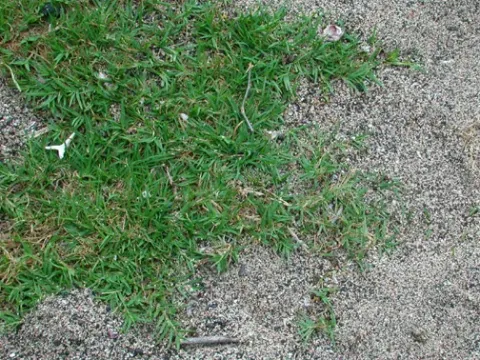
Hairy couch grass
Cynodon hirsutus
Hairy couch grass is a heat-loving perennial grass, therefore the optimal sowing period occurs when the soil temperature at planting depth reaches above 15-18 degrees Celsius.
What the section contains
Hairy couch grass
In temperate climate regions, sowing is typically carried out in late spring or early summer, allowing the plant a sufficient vegetative period to develop its root system before autumn cooling.
The seeds of this species possess a distinct dormancy period, so pre-sowing treatment is often applied to improve germination rates and ensure uniform seedling emergence.
A crucial factor during sowing is the planting depth: it must be shallow, as the small seeds require close contact with moist soil and sufficient access to sunlight to germinate.
Seeding density should be high enough to form a dense sod cover, which prevents soil erosion and suppresses the growth of competitive weeds during the early stages of development.
The crop belongs to the Poaceae family and is characterized by high adaptability to various soil types, including sandy and rocky substrates where other grasses fail to thrive.
The main climate requirement is an abundance of sunlight and warm temperatures, as Hairy couch grass demonstrates exceptional resistance to prolonged periods of drought.
The plant prefers well-drained sites and avoids waterlogged or swampy areas, as stagnant moisture can negatively affect the development of its underground root network.
In terms of soil fertility, the crop is undemanding; however, the application of mineral fertilizers, especially nitrogen, significantly accelerates biomass production during active growth.
Thanks to an extensive system of rhizomes, this species successfully stabilizes loose soil, making it a valuable component for land reclamation and erosion control projects.
The yield of green matter directly depends on the moisture level and nutrient availability in the soil; under intensive management, the productivity can reach high indicators.
With systematic cutting, Hairy couch grass shows the ability for rapid regrowth, which allows for multiple harvests throughout a single vegetative season.
Its use as a pasture crop ensures a stable feed supply, as the plant withstands livestock trampling well due to its resilient and flexible vegetative structure.
To increase the productivity of the stands, it is recommended to carry out rejuvenation procedures and periodic fertilization, which stimulates tillering and the formation of new shoots.
Economic use includes the production of high-quality hay when harvested timely, before the stems become overly lignified and lose their nutritional value.
Hairy couch grass possesses a natural immunity to many diseases common to other agricultural grasses, which significantly reduces the need for chemical fungicide applications.
Typical pests include insects that feed on the succulent parts of the plant, though severe infestations causing widespread damage are relatively rare for this species.
The risks of root rot diseases increase only when agronomic practices are violated, particularly under conditions of excessive soil moisture combined with low temperatures.
Competition with aggressive weed species may pose a threat only at the seedling stage, making weed control crucial during the first year of the crop's establishment.
Preventing pest damage relies on maintaining proper grazing schedules and implementing effective crop rotation to prevent the buildup of specific pest populations.
Harvesting for hay is conducted during the heading phase, when the plant is maximally enriched with nutrients and the stems still retain sufficient softness and feed quality.
When used as a pasture, it is important to observe proper grazing pressure to avoid excessive soil exposure and prevent the depletion of the plant's underground rhizomes.
Mechanical harvesting is performed using standard mowers; the crop dries quickly in windrows due to its heat tolerance and high moisture evaporation rate.
It is important to manage the cutting height correctly: mowing too low can delay subsequent regrowth, so a stubble height of 5-7 centimeters is considered optimal.
The harvested product should be stored in dry, well-ventilated facilities, as the presence of residual moisture can lead to mold development and loss of feed quality.