
Hakonechloa
Hakonechloa Makino ex Honda
Hakonechloa (Hakonechloa) is a genus of perennial grasses belonging to the Poaceae family. It is a monotypic genus native to the island of Honshu in Japan, where it typically inhabits moist, rocky mountain slopes under forest canopy.
What the section contains

Hakonechloa
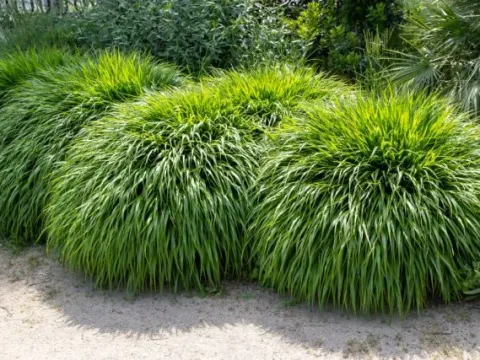
The plant is highly prized for its graceful, cascading habit, which resembles delicate bamboo foliage. It develops slowly, creating dense, mound-like clumps that spread via short rhizomes, making it an excellent choice for ground coverage in landscape architecture.
Ideal conditions for cultivation include partial to full shade, as intense sunlight can scorch the foliage of most cultivars. The plant thrives in temperate climates, showing significant hardiness, though it benefits from mulch protection during harsh winters.
Soil requirements focus on high organic content, consistent moisture, and excellent drainage. Hakonechloa is intolerant of drought; regular irrigation is necessary during dry spells to maintain the turgidity and vibrant color of its characteristic leaves.
In terms of usage, the plant is primarily ornamental. It is widely used in shade gardens, near pond edges, and in container plantings where its arching stems can drape elegantly over the sides of the pots, creating a refined, tranquil aesthetic.
Hakonechloa is generally robust and free from significant pest or disease issues when planted in suitable environments. Most problems arise from improper site selection, such as too much sun exposure which leads to severe leaf burn during the peak of summer.
Root rot is the most common pathological threat, usually triggered by waterlogged soils or poor drainage during the dormant season. Ensuring the planting site has adequate soil porosity is the most critical preventative measure against fungal attacks.
Slugs and snails may occasionally feed on the lush, soft leaves during wet periods. Management involves keeping the area around the base of the plant free from debris, which discourages these pests from taking up residence near the foliage.
While leaf spot diseases are rare, they may occur in overly humid conditions with stagnant air. Providing sufficient spacing between plants and avoiding overhead irrigation can significantly reduce the risk of humidity-related foliage damage.
Routine maintenance includes a thorough cleanup in early spring before new growth emerges. Removing dead foliage prevents moisture retention at the crown of the plant, promoting healthy spring development and reducing the risk of dormant-season decay.