
Hakonechloa
Hakonechloa
Hakonechloa is a genus of perennial grasses belonging to the Poaceae family. Native to the mountainous regions of Japan, specifically the Hakone area, this plant thrives in cool, humid environments with partial shade.
What the section contains
Hakonechloa
The crop requires moist, well-draining, and humus-rich soil for optimal growth. It is highly sensitive to drought conditions; therefore, the soil must be kept consistently moist to ensure the health of the rhizomatous root system.
While Hakonechloa is shade-tolerant, it requires a moderate climate to perform at its best. In warmer regions, it must be planted in areas shielded from intense afternoon sun to prevent desiccation and foliar burn.
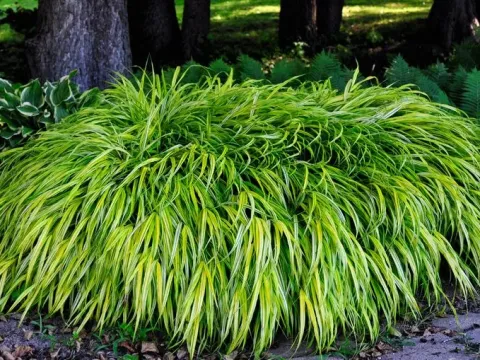
The plant exhibits a slow growth rate and a unique cascading habit. Botanically, its leaves are broad and elegant, creating a cascading effect that is highly valued in both commercial and private landscaping projects.
Agronomic management involves spring fertilization with a balanced, slow-release organic fertilizer. Annual maintenance is limited to trimming back dead foliage in late winter or early spring before new growth emerges from the rhizomes.
Hakonechloa is generally considered a low-maintenance crop with a high resistance to common agricultural pathogens. Disease issues are usually restricted to root rot if the planting site lacks proper drainage.
Pest problems are minimal, though slugs and snails may pose a threat in wet, shaded garden environments. Preventive measures, such as maintaining cleanliness around the root base, are usually sufficient to manage these populations effectively.