
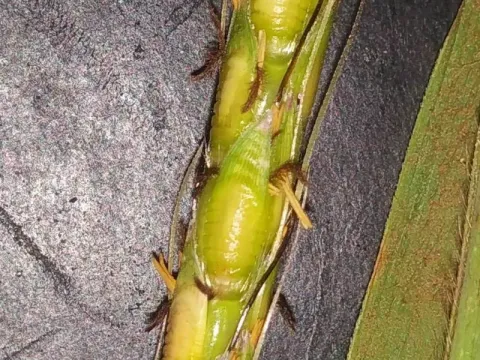
Ischaemum goebelii
Ischaemum goebelii
Ischaemum goebelii is a perennial herbaceous plant belonging to the grass family Poaceae. This species is known for its remarkable resilience and structural adaptations, which allow it to thrive in challenging environments where other grasses might fail to survive.
What the section contains
Ischaemum goebelii
Native to arid and semi-arid regions, the distribution area of this plant is concentrated in zones characterized by limited rainfall and high solar radiation. Its evolutionary history has equipped it with biological mechanisms to efficiently manage water resources within its plant tissue.
The crop thrives in well-drained soils, often demonstrating a preference for sandy or stony ground conditions. It is not particularly demanding regarding soil nutrient levels, which makes it a potentially useful species for stabilizing degraded landscapes or marginal agricultural lands.
Botanically, the species is distinguished by its specific inflorescence structure and a robust root system. The root architecture is designed for deep soil penetration, enabling the plant to access moisture reserves that are unavailable to shallower-rooted species in the same ecological niche.
In terms of agricultural use, Ischaemum goebelii is primarily valued for its role in livestock grazing systems. It provides a reliable source of forage in environments where more sensitive grass species struggle to provide sustained green biomass throughout the year.
The plant faces several threats, primarily from fungal pathogens that can flourish during periods of uncharacteristic moisture, leading to leaf blights and rust. Additionally, common insect pests, such as grass-feeding aphids and various lepidopteran larvae, may hinder the growth and overall health of the stands.
Ecological degradation, particularly from overgrazing, poses a significant threat to the long-term viability of Ischaemum goebelii populations. When the intensity of animal grazing exceeds the plant's capacity for regrowth, the root reserves become depleted, eventually leading to a loss of cover and biodiversity.