
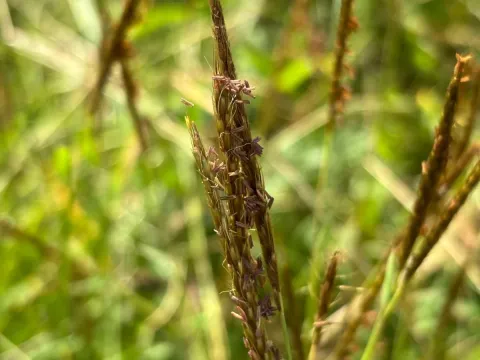
Ischaemum indicum
Ischaemum indicum
Ischaemum indicum is a perennial grass species that plays a significant role in tropical forage production. Planting is typically carried out at the beginning of the rainy season, as the seeds and young plants require high soil moisture levels to establish successfully.
What the section contains
Ischaemum indicum
Seeds are broadcast or sown in rows at a shallow depth to ensure proper germination. Given the small size of the seeds, close contact with moist soil is essential, which facilitates the rapid development of the root system and initial shoot formation.
Vegetative propagation is also a highly effective method for this species. Planting rooted stem cuttings allows for the rapid establishment of ground cover, which is particularly useful in areas where natural reseeding might be slow or unreliable.
The optimal temperature for growth ranges between 25 and 30 degrees Celsius. In these favorable conditions, the grass exhibits a rapid growth rate, quickly forming a dense mat that can withstand grazing pressure.
Weed management during the initial establishment phase is crucial. As the young seedlings develop, they may compete with faster-growing weeds, requiring careful monitoring to ensure the stand remains pure and productive.
This grass species is particularly well-adapted to areas with high rainfall and exhibits a strong tolerance for waterlogged soils. It thrives in low-lying areas, floodplains, and damp depressions where other forage grasses might suffer from oxygen deprivation.
Ischaemum indicum is not highly demanding regarding soil fertility, allowing it to grow on a variety of soil types including heavy clays and loams. It can adapt to moderately acidic soils, which are common in many tropical regions.
While the plant prefers full sun to maximize its biomass production and nutritional quality, it demonstrates some shade tolerance. This makes it a versatile species for silvopastoral systems or areas with canopy cover.
Nitrogen fertilization is recommended to maintain high levels of production, especially under intensive grazing systems. Since the green forage is frequently removed by livestock, soil nutrient levels must be managed to sustain growth.
The grass is known for its excellent tolerance to trampling, making it a robust choice for pastures. It maintains its structural integrity even under heavy livestock movement, which is a major advantage for commercial agriculture.
The primary threats to this grass include fungal diseases like leaf rust or various leaf spots, which can become prevalent during long, humid, and overcast periods. Maintaining good air circulation within the stand is a preventive measure.
Insect pests such as leaf-eating caterpillars or aphids may occasionally affect the crop. However, these rarely reach damaging levels in a healthy, well-managed pasture, as natural predators usually maintain ecological balance.
Soil compaction caused by heavy grazing during extreme weather conditions can lead to root damage and thinning of the stand. It is advisable to implement rotational grazing to allow the plant community time to recover.
Encroachment by aggressive weeds is a concern if the pasture is left underutilized. Regular grazing or occasional mowing prevents weeds from establishing dominance and encourages the grass to remain the primary ground cover.
Overall management should focus on maintaining a vigorous stand, which serves as a natural defense against most pathogens and invasive species in the agricultural environment.
The main utility of Ischaemum indicum lies in its use as high-quality forage for cattle, sheep, and goats. It is highly palatable, and its nutritional content is highest when grazed or harvested in the vegetative state before flowering.
When used for hay or silage, harvesting should be performed at the booting or early heading stage. This timing ensures the best balance of biomass volume and nutritional density, particularly in terms of protein and energy.
Cutting should be maintained at a height of 7–10 cm to preserve the plant's growth points. This practice promotes rapid regrowth and allows for multiple harvests or grazing cycles within a single growing season.
Beyond its feed value, the species is highly effective for soil conservation. Its dense root network binds the soil particles together, preventing erosion on slopes and degraded lands in tropical environments.
- High palatability and nutritional value for livestock.
- Excellent tolerance to wet and flood-prone soil conditions.
- Rapid recovery rate following grazing or cutting.
- Superior ability to prevent soil erosion.