
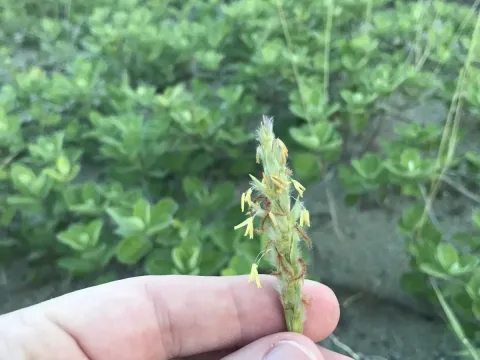
Ischaemum anthephoroides
Ischaemum anthephoroides
Ischaemum anthephoroides is a perennial herbaceous plant belonging to the grass family Poaceae. It is a highly specialized species primarily found in coastal environments where it plays a critical role in stabilizing sandy substrates.
What the section contains
Ischaemum anthephoroides
The native distribution of this species spans the coastal regions of East Asia, including Japan and Korea. It is specifically adapted to the harsh conditions of sand dunes, where it thrives in shifting soil environments and withstands saline air.
In terms of environmental requirements, the plant demands well-drained, sandy soils. It is remarkably tolerant to salt spray, which is a major limiting factor for many other agricultural grass species in coastal territories.
The crop requires full sun exposure for optimal growth and development. It is sensitive to shade and competition from taller vegetation, making it an excellent candidate for pioneer planting on sandy, open coastal stretches.
Agricultural and ecological use of the plant is centered on its value in phytoremediation and soil conservation. By forming a dense root network, it prevents the loss of coastal lands to wind erosion and supports the stabilization of dunes.
The main threats to the health of this species include fungal pathogens that thrive in humid, stagnant coastal microclimates. Foliar rust and various leaf spot diseases are the most commonly observed issues during periods of excessive moisture.
In terms of invertebrate pests, aphids and specialized soil-dwelling larvae can occasionally impact the plant's vigor. However, due to its robust nature and adaptation to poor, saline soils, the plant generally maintains high resilience against significant pest damage.