
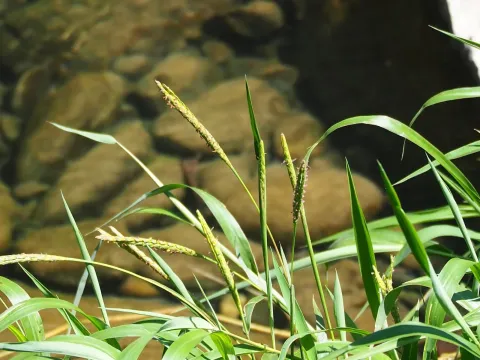
Ischaemum aristatum
Ischaemum aristatum
Ischaemum aristatum, a member of the Poaceae family, is a perennial grass species that plays a significant role in tropical and subtropical agriculture. Sowing typically begins at the onset of the rainy season, as the seeds require consistent moisture levels to initiate germination and establish a robust root system.
What the section contains
Ischaemum aristatum
Selecting high-quality seeds is essential for ensuring uniform emergence. The soil should be well-prepared and warm to facilitate the metabolic processes of the seeds. Mechanical planting is often preferred to ensure precise spacing and depth, usually ranging from 1 to 2 centimeters.
The seeding rate must be balanced based on the specific utilization goals, such as fodder production or grazing land improvement. In many agricultural systems, this grass is broadcasted to rejuvenate existing grasslands due to its vigor and ability to compete with native vegetation.
Post-sowing management includes rolling the soil to optimize seed-to-soil contact. This step is crucial to prevent dehydration of the seeds and to protect them from erosion caused by heavy rains common in the native regions of this crop.
Weed control in the establishment phase is vital for the survival of the seedlings. As Ischaemum aristatum tends to grow slowly in its initial weeks, manual or mechanical weeding is highly recommended to prevent overshadowing by aggressive weeds.
This grass is highly prized for its exceptional adaptability to challenging soil conditions, including heavy clays and waterlogged areas. Its ability to thrive where other grasses fail makes it a preferred choice for managing low-lying pastures and poorly drained fields.
Ischaemum aristatum is strictly a warm-climate species, thriving in environments with high average temperatures and abundant sunlight. It has almost no frost tolerance, which restricts its cultivation to tropical and equatorial belts where year-round temperatures remain favorable.
Regarding light requirements, the plant shows a preference for full sun exposure. While it can survive in partially shaded environments, its growth rate and biomass quality significantly diminish in such conditions, impacting overall pasture efficiency.
Soil fertility requirements are modest, yet the grass responds vigorously to nitrogen-based fertilization. It is generally tolerant of a wide range of soil pH levels, demonstrating success in both acidic and neutral environments common in tropical zones.
Water management is essential during the early stages of development. Once the root system is fully established, the plant shows moderate drought resistance, allowing it to survive short dry spells, although continuous production requires adequate rainfall.
The yield potential of Ischaemum aristatum is largely determined by the intensity of the harvest or grazing pressure. When managed correctly in a rotational system, the crop can provide multiple cuts per growing season, offering a consistent supply of forage.
Nutritionally, the forage is most valuable during the vegetative growth phase. It provides essential proteins and fiber for ruminant livestock, making it a sustainable base for livestock production in warm regions.
Productivity is maintained by ensuring that the grass is not overgrazed. Allowing the plant to recover after intensive use is necessary to build carbohydrate reserves in the roots, which ensures the longevity of the pasture stand.
Field experience indicates that a well-maintained stand of Ischaemum aristatum can be harvested for several years without the need for frequent replanting, making it a cost-effective solution for permanent pasture land.
Beyond its value as fodder, the crop provides significant ecosystem services. Its dense root system and ground cover prevent soil erosion, maintaining soil structure and water filtration in fragile tropical environments.
Major diseases affecting this species include various rust fungi and leaf spot pathogens, which thrive in high-humidity climates. Proper management, such as timely harvesting to prevent excessive canopy thickness, can minimize the risk of infection.
Pest management focuses on insects that attack the foliage and reproductive parts. Integrated pest management (IPM) practices, such as biological control and rotating grazing schedules, are preferred over excessive chemical interventions to protect local biodiversity.
Nematode infestations can pose a threat to root health, potentially leading to stunted growth. To mitigate this risk, farmers are advised to use healthy planting stock and practice field sanitation to prevent the spread of soil-borne pathogens.
Mold and fungal growth can become an issue during the drying process if the harvested forage is stored with excess moisture. Ensuring proper ventilation and drying techniques is essential to preserve the nutritional quality and safety of the feed.
Controlling invasive weeds within the stands is best handled through controlled grazing or strategic mowing. Chemical herbicides may be used when necessary, provided they are selective and labeled for use on forage grasses to avoid damaging the crop.