
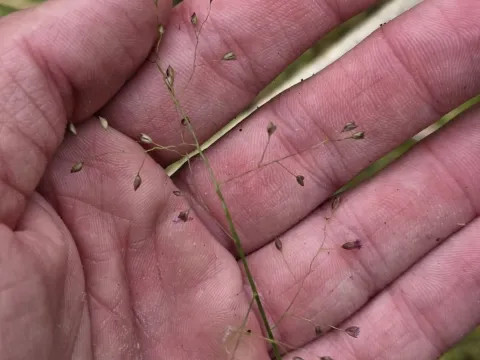
Isachne
Isachne
The Isachne genus comprises diverse perennial grass species within the Poaceae family, widely distributed across tropical and subtropical regions globally.
What the section contains
 Isachne albens
Isachne chevalieri
Isachne chevalieri
Isachne ciliaris
Isachne ciliaris
Isachne albens
Isachne albens
Isachne chevalieri
Isachne chevalieri
Isachne ciliaris
Isachne ciliaris
 Isachne clarkei
Isachne clarkei
Isachne clarkei
 Isachne debilis
Isachne debilis
Isachne debilis
 Isachne dispar
Isachne elegans
Isachne elegans
Isachne dispar
Isachne dispar
Isachne elegans
Isachne elegans
 Isachne globosa
Isachne himalaica
Isachne himalaica
Isachne globosa
Isachne globosa
Isachne himalaica
Isachne himalaica
 Isachne kunthiana
Isachne kunthiana
Isachne kunthiana
 Isachne lisboae
Isachne meeboldii
Isachne meeboldii
Isachne myosotis
Isachne myosotis
Isachne pangerangensis
Isachne pangerangensis
Isachne pauciflora
Isachne pauciflora
Isachne lisboae
Isachne lisboae
Isachne meeboldii
Isachne meeboldii
Isachne myosotis
Isachne myosotis
Isachne pangerangensis
Isachne pangerangensis
Isachne pauciflora
Isachne pauciflora
 Isachne pulchella
Isachne scabrosa
Isachne scabrosa
Isachne pulchella
Isachne pulchella
Isachne scabrosa
Isachne scabrosa
 Isachne timorensis
Isachne timorensis
Isachne timorensis
Isachne
Sowing should be synchronized with the onset of the rainy season to ensure that young seedlings receive consistent moisture required for their establishment phase.
Seeds are typically sown in well-prepared, fine-textured seedbeds at a shallow depth of 1-2 centimeters to ensure adequate contact with the soil while promoting rapid emergence.
In regions where vegetative propagation is preferred, stem cuttings containing active nodes are planted directly into the moist soil to foster quick rooting.
Maintaining optimal spacing between rows is essential for early development, allowing plants to access nutrients and light efficiently as they establish ground cover.
Isachne species generally thrive in environments with high humidity and fertile, well-draining soils, often colonizing marshy edges and wetlands naturally.
The crop requires warm temperatures throughout the growing cycle, as it is highly sensitive to cold and lacks tolerance for any degree of frost during its life cycle.
While the plants prefer full sun exposure to maximize photosynthetic rates, they can adapt to partial shade, making them versatile for various agro-ecosystems.
Soil pH levels should ideally be in the slightly acidic to neutral range, which supports the healthy uptake of nitrogen and other essential micronutrients.
Management practices such as regular fertilization are critical for maximizing green biomass, especially in fields intended for long-term forage production.
The primary agricultural utility of Isachne is as high-quality forage, providing a nutritious feed source for livestock such as cattle and sheep in tropical zones.
The yield potential is significant when water and soil nutrients are adequately managed, allowing for multiple harvests within a single favorable growth season.
High digestibility and protein content make this genus a valuable component in improving degraded pastures and supporting sustainable livestock production systems.
In addition to its use as feed, Isachne serves a restorative role in soil conservation by preventing erosion due to its dense, fibrous root system.
- Excellent palatability for ruminants.
- Fast regrowth rates following mechanical harvesting.
- High biomass production potential under irrigation.
Fungal diseases, including leaf spot and rust, are the most prevalent threats to Isachne crops, particularly during periods of excessive rainfall and stagnant air.
Insect pests such as grass flies and certain species of caterpillars can cause localized damage, reducing the total volume of harvestable green mass.
Weed infestation poses a challenge, especially in the early stages of crop development, requiring manual or selective chemical weeding for effective management.
Root rot pathogens may proliferate if soil drainage is inadequate, leading to plant decline and patchy stands that necessitate re-seeding or re-planting.
Integrated pest management (IPM) strategies are recommended to maintain crop health while minimizing the use of synthetic chemicals in the field.
Harvesting is ideally timed at the early flowering or boot stage, ensuring a balance between biomass volume and the nutritional quality of the plant tissue.
Mechanical harvesting with rotary mowers allows for efficient processing, provided the cutting height is set to preserve the basal nodes for rapid regrowth.
If the harvest is intended for hay, quick drying is necessary to prevent spoilage, as the high water content of Isachne can lead to molding if not handled correctly.
Staggered harvesting schedules can ensure a continuous supply of fresh forage for livestock throughout the year in regions with favorable climate conditions.
Proper field management after harvest, including light fertilization or irrigation, encourages the plant to enter a new, vigorous cycle of growth immediately.