
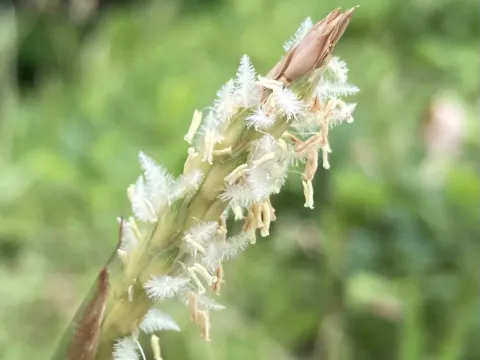
Ischaemum muticum
Ischaemum muticum
Ischaemum muticum is a perennial grass species belonging to the Poaceae family. Native to tropical Southeast Asia, it is highly valued for its ability to form dense, spreading mats that stabilize soil surfaces efficiently.
What the section contains
Ischaemum muticum
The plant exhibits creeping stems that root at the nodes, creating a resilient vegetative layer. The leaves are typically leathery and lance-shaped, which allows the plant to withstand intense tropical sunlight and high evaporation rates.
Climatically, this species thrives in warm, humid conditions. It requires consistent moisture throughout the growing season to maintain its biomass and high protein content, which is essential for forage purposes.
Soil requirements for Ischaemum muticum are relatively flexible. While it prefers fertile, well-drained loamy soils, it is known to perform well in sandy coastal areas where other forage grasses might struggle to establish.
Agricultural management primarily focuses on its use as a permanent pasture or ground cover. It is noted for its ability to recover rapidly after grazing or mechanical harvesting, making it a sustainable choice for tropical livestock systems.
Fungal diseases represent the most significant threat to this crop, particularly during the wet season. High humidity creates an environment conducive to rust and leaf spot pathogens that can decrease the photosynthetic area.
Pests such as shoot-boring insects can inflict damage on young stems, leading to stunted growth. Systematic monitoring of plant health is necessary to prevent widespread outbreaks within the forage fields.
Root-knot nematodes can impact the vigor of the plant in sandy, nutrient-deficient soils. Enhancing soil organic matter is a recommended practice to mitigate the negative effects of subterranean pests.
Competition from aggressive broad-leaf weeds can hinder the establishment of Ischaemum muticum during the early growth phase. Early weed management is crucial for successful stand development.
Overgrazing poses a mechanical threat to the root system and can lead to soil compaction. Proper rotational grazing practices are vital to maintain the density and long-term productivity of the pasture.