
Harding grass
Phalaris tuberosa
Description
Sowing dates
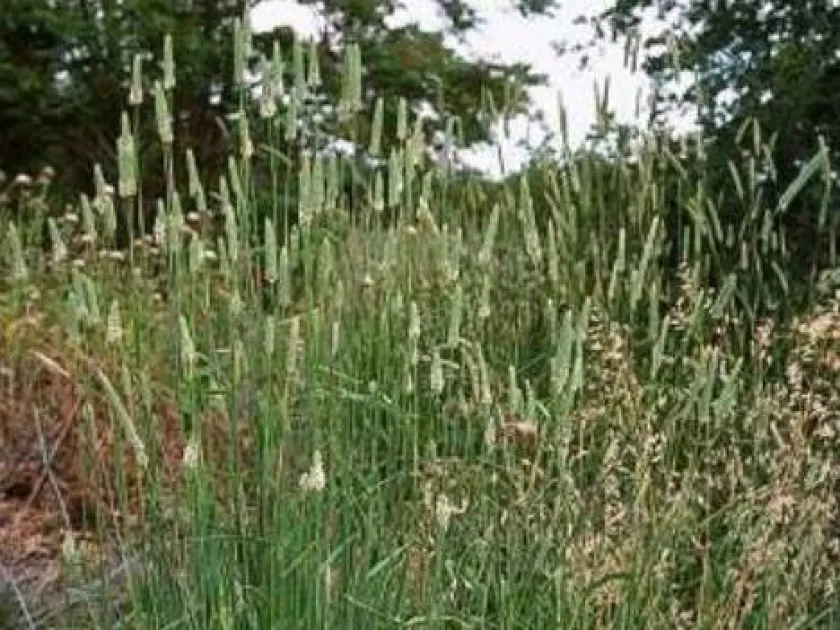
Harding grass (Phalaris tuberosa), also known as Phalaris aquatica, is a highly valuable perennial forage grass belonging to the Poaceae family. Its defining feature is the presence of tuberous, thickened rhizomes that store nutrients and moisture, allowing the plant to survive extended periods of drought.
The optimal time for sowing is during the cool season, specifically just before the onset of autumn or spring rains. Providing adequate soil moisture during the germination phase is critical for establishing a robust root system, which is the foundation for the plant's long-term productivity.
Seeds must be sown at a shallow depth of 1-2 centimeters into a fine, firm, and weed-free seedbed. Proper soil compaction after sowing is essential to ensure a close interface between the seed and the soil particles, facilitating efficient moisture uptake for germination.
Seeding rates typically range from 3 to 6 kilograms per hectare, depending on whether the grass is grown in a pure stand or as part of a pasture mixture. Proper spacing allows individual plants to develop their unique tuberous root systems, which eventually create a dense and competitive stand.
Initial growth is relatively slow, making the establishment phase the most vulnerable period. Effective weed control and protection from early grazing are necessary to allow the plants to develop sufficient root reserves before they are exposed to intensive animal browsing.
Growing requirements
Harding grass thrives on deep, fertile, well-drained loamy soils but displays a remarkable ability to adapt to a wide range of soil types. It performs best in soils with a neutral pH, where its deep root system can access both water and essential nutrients from lower horizons.
The species is renowned for its exceptional drought tolerance, which is facilitated by its subterranean storage organs. These tubers serve as an energy reservoir, allowing the grass to remain dormant during dry summers and quickly re-sprout when favorable moisture conditions return.
Waterlogging and poorly drained soils are detrimental to the species, often leading to root decay and reduced stand longevity. Therefore, selecting well-drained slopes or upland areas for cultivation is a standard agronomic recommendation for optimal crop performance.
Nitrogen fertilization is highly effective in boosting leaf production, especially in the early stages of growth and during recovery cycles. Phosphorus and potassium are also essential to support the long-term health of the tuberous roots and to enhance the winter hardiness of the plant.
Climate adaptability is one of the key strengths of Phalaris tuberosa, as it thrives in Mediterranean-type climates characterized by distinct wet and dry cycles. It is a highly persistent grass that can maintain productivity for many years under appropriate management conditions.
Yield
The productivity of Harding grass is directly correlated with environmental conditions, particularly the availability of nitrogen and moisture. Under optimized management, it provides a high-quality forage source with a vigorous regrowth capacity after grazing or mechanical harvest.
Pasture management is crucial; rotational grazing ensures that the plant has enough time to replenish its carbohydrate reserves in the tubers. If the plants are overgrazed consistently, the root system weakens, leading to a significant decrease in biomass production over time.
The forage quality remains superior during the vegetative growth phase. As the plants mature into the heading phase, nutritional value declines significantly. Timely management is required to keep the grass in a young, leafy state, which is preferred by livestock and ensures higher digestibility.
Stand longevity is a significant economic benefit, as well-managed pastures can remain productive for 5 to 10 years or more. This reduces the costs associated with frequent reseeding and soil preparation, making it a sustainable choice for long-term livestock farming.
Integrating Phalaris tuberosa with legumes provides a balanced nutritional profile for animals while also enhancing total dry matter yield through nitrogen fixation. This synergy creates a highly efficient agricultural system that minimizes the need for synthetic inputs.
Main diseases and pests
Although the plant is quite hardy, it can be susceptible to fungal diseases like rust and leaf spot during periods of high humidity and poor air circulation within the stand. Proper grazing management helps maintain an open canopy, reducing the risk of disease outbreaks.
Insect pests, including aphids and various grass-feeding larvae, can occasionally damage the vegetative parts of the plant. A regular scouting program during the early growth stages is necessary to detect potential threats and implement timely control measures if required.
Nematodes can pose a challenge in compact or waterlogged soils, where they attack the root system and tubers. Implementing a crop rotation strategy and improving soil structure are effective ways to mitigate the impact of soil-borne pathogens on the overall health of the pasture.
Overgrazing and mismanagement of the regrowth phase are the most significant threats to the stand. Constant pressure prevents the plants from storing energy in their tubers, ultimately leading to thin, unproductive pastures that are easily invaded by invasive weeds.
Overall, Phalaris tuberosa is considered a low-maintenance, resilient crop. With balanced agronomic practices, the need for chemical pesticides is kept to a minimum, ensuring a sustainable and environmentally friendly approach to forage production.
Harvesting
When intended for hay production, the crop should be harvested at the early heading stage. This timing captures the highest levels of protein and energy while keeping the fiber content at a manageable level for high-quality livestock feed.
Grazing management must focus on leaving a residual stubble height of at least 5-7 centimeters. This height is essential for photosynthesis to continue, allowing the plant to store energy in its tubers after the livestock have been moved to a different paddock.
Effective drying is necessary for preserving high-quality hay, as the succulent nature of the stems and the tuberous influence can retain moisture for a longer duration. Mechanical turning and conditioning during the drying process ensure a uniform moisture level, preventing mold growth.
Silage production is a viable option for surplus biomass. Due to the sugar content of the plant, it ferments well in anaerobic conditions, resulting in a stable and nutritious feed that can be stored for feeding during the winter months.
Seed harvesting requires careful timing due to the natural tendency of the seeds to shatter upon reaching maturity. Harvesting should occur when the seed heads are turning brown but before complete seed shed. Proper cleaning and drying immediately after harvest are critical for storage viability.