
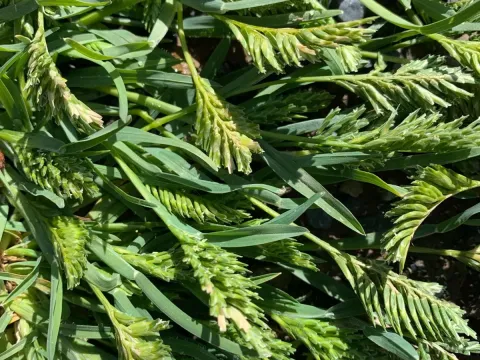
Hardgrass
Sclerochloa
Hardgrass, belonging to the genus Sclerochloa, is a type of annual grass within the Poaceae family. These plants are native to temperate regions of Europe and Asia, where they have adapted to specific environmental conditions that often challenge more delicate forage crops.
What the section contains

Hardgrass
The plant is known for its remarkable ability to thrive on saline and compacted soils. This physiological trait makes Sclerochloa a valuable candidate for re-vegetating marginal lands and reclaiming degraded areas that are unsuitable for intensive cultivation.
Botanically, hardgrass is characterized by its prostrate or semi-erect growth habit and dense, spike-like panicles. The stems are noticeably rigid, which gives the plant its common name and provides structural integrity even under grazing pressure.
In terms of environmental requirements, hardgrass is highly resilient to cold temperatures. Its growth cycle is synchronized with early spring moisture, allowing it to establish and produce biomass before the onset of summer heat, which may trigger its maturation and dormancy.
The primary agricultural use of hardgrass is in pasture management. Because it withstands trampling and grazing well, it serves as an excellent component for natural pastures, providing nutrition for livestock in challenging habitats where standard forage grasses fail to persist.