
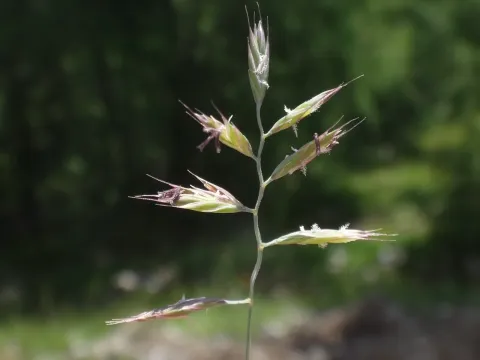
Mountain fescue
Festuca rupicaprina
Mountain fescue (Festuca rupicaprina) is a perennial grass belonging to the Poaceae family. It is native to alpine and subalpine environments, primarily thriving in rocky or mountainous regions across Europe.
What the section contains
Mountain fescue
The plant is characterized by its high tolerance to extreme environmental conditions, including thin soils and significant temperature fluctuations. Its growth habit is typically tufted, forming dense, resilient sod that protects the ground.
Regarding soil requirements, Mountain fescue prefers well-drained, nutrient-poor substrates. It is well-adapted to alkaline or neutral soil pH levels and generally avoids waterlogged or heavy clay environments.
In terms of agricultural management, it is valued for its persistence and low-maintenance requirements. It serves as an excellent ground cover for slopes, helping to stabilize soil and prevent runoff in mountainous agricultural zones.
The crop is highly palatable to livestock, making it a valuable resource for highland pastures. It can withstand moderate grazing pressure while maintaining its structural integrity and productivity throughout the season.
The species is susceptible to various fungal pathogens such as rusts and powdery mildew, which typically appear under high humidity conditions. Maintaining optimal drainage is the primary cultural practice to mitigate these risks.
Common insect pests include grass aphids and stem-boring larvae, which can impact biomass production. Integrated management focuses on maintaining a healthy, balanced plant stand to limit the potential for significant pest outbreaks.