
Mountain timothy
Phleum montanum
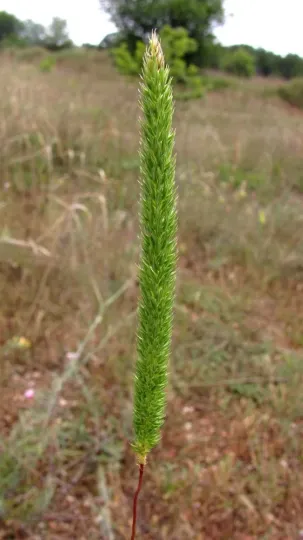
Description
Sowing dates
Mountain Timothy (Phleum montanum) is a perennial grass species belonging to the Poaceae family. Highly valued for its resilience in alpine and subalpine environments, it serves as an excellent component for high-altitude pastures and permanent meadow systems where other forage species may struggle.
The optimal sowing period is early spring, immediately after the ground becomes workable, to ensure the plants benefit from the residual moisture in the soil. Autumn planting is also possible in areas with temperate climates, provided the seeds establish before the onset of deep freezing.
Given the small seed size of Mountain Timothy, the sowing depth must be strictly limited to 1–2 centimeters. Placing the seeds deeper significantly impairs germination energy, leading to poor stand establishment and an uneven canopy that may be easily invaded by opportunistic weeds.
Seedbed preparation is crucial; the soil should be fine-textured, level, and well-consolidated. Rolling the soil both before and after broadcasting the seeds is a best-practice agronomic technique that ensures the necessary contact between the seed and the soil particles for uniform germination.
In mixed seeding applications, Mountain Timothy is often paired with legumes like clover or alfalfa. Due to the difference in seed size, separate passes or specific equipment settings for each component are recommended to achieve an even distribution of the grass and legume components within the sward.
Growing requirements
Mountain Timothy is uniquely adapted to cool, high-altitude climates, exhibiting remarkable frost tolerance and winter hardiness. Its growth pattern is synchronized with the short, cool growing seasons of mountain regions, allowing it to remain productive where warmer-climate grasses would fail.
The species prefers moist, well-drained, fertile soils with a neutral or slightly acidic pH level. While it can withstand temporary waterlogging better than some grasses, it is not a semi-aquatic species and thrives best when the soil oxygen levels are adequate for root respiration.
Soil fertility management should focus on providing essential nitrogen, phosphorus, and potassium levels. Nitrogen application during the early growth phase promotes vigorous vegetative development, but it should be managed carefully to avoid stimulating excessive height that leads to lodging.
Light requirements for this species are relatively high. Mountain Timothy is not shade-tolerant and will decline in density if overtopped by competitive tall-growing species in a meadow. Therefore, managing the canopy height through periodic grazing or cutting is essential to maintain its dominance.
In terms of moisture, while it is hardy, the plant responds favorably to consistent rainfall during the vegetative phase. During periods of drought, the plant may enter a state of dormancy, which is a survival mechanism, but it may cause a significant temporary reduction in total biomass yield.
Yield
The primary use of Mountain Timothy is in hay production and pasture usage. It is highly palatable, and its fine stems and nutrient-dense leaves make it a preferred forage for livestock, including cattle, sheep, and horses, contributing to improved weight gain and milk production.
Yield capacity is largely determined by site quality and management intensity. Under ideal conditions with appropriate fertilization and adequate water availability, the species can produce consistent biomass over multiple years, making it a cost-effective choice for long-term land management.
The regrowth capacity after cutting is moderate, allowing for multiple harvests in regions with sufficiently long growing periods. When managed as a pasture, its density and growth habit make it resistant to light to moderate trampling by livestock, provided the soil is not overly wet.
For seed production, intensive management is required, focusing on row spacing and weed control to maximize yield. Harvesting for seed requires precise timing to avoid excessive shattering, as the seeds mature unevenly across the panicle during the later stages of development.
Nutritional value is optimized during the early flowering phase. Farmers are encouraged to target the period just before full bloom to balance total yield with the high protein and sugar content required for high-quality winter feed for livestock populations.
Main diseases and pests
Phleum montanum is susceptible to various fungal diseases, with leaf rust and powdery mildew being the most frequent challenges in humid, warm conditions. These infections can drastically reduce the photosynthetic capacity and nutritional quality of the forage crop.
Pest pressure often comes from aphids and various grass-feeding larvae that attack the developing stems and seeds. If not managed properly, these pests can lead to stunted growth or reduced seed viability, affecting both current yield and the potential for future reseeding.
- Rust: A fungal disease resulting in reddish-brown pustules on leaves.
- Powdery Mildew: Appears as a white, dusty layer, triggered by poor ventilation.
- Aphids: Small sap-sucking insects that weaken the plant stems.
- Stem Nematodes: May cause distortion and stunting in severe infestations.
- Root Rot: Often associated with poorly drained, compacted soils.
Prophylaxis involves regular monitoring of the sward during the spring and early summer. Avoiding over-fertilization with nitrogen and ensuring proper airflow within the canopy are effective cultural methods to minimize the occurrence of fungal pathogens and insect outbreaks.
In cases of high infestation, localized fungicide or insecticide application may be required, although preference should always be given to biological control methods or preventive agronomic practices such as crop rotation and balanced nutrient management to support natural plant immunity.
Harvesting
Harvesting Mountain Timothy for hay requires careful timing. Cutting at the onset of the heading stage ensures that the nutritional profile is at its peak. Delaying harvest leads to increased lignification of the stems, which decreases palatability and digestibility for livestock.
Modern harvest technology, including the use of mower-conditioners, significantly improves the drying process. By bruising the stems, moisture evaporates faster, reducing the time the hay needs to lie in the field and minimizing exposure to potentially damaging weather conditions.
For seed collection, a two-stage harvesting process is often employed: swathing the grass first and letting it dry in the field, followed by picking up and threshing. This method helps in managing the uneven maturation of the seed heads and reducing losses from shattering.
Moisture control during the baling and storage process is vital. Baling hay with moisture content above 18–20% can lead to heating, spoilage, and the growth of toxic molds, which can render the entire batch unsafe for animal consumption.
Proper storage in dry, well-ventilated barns or under covers protects the hay from the elements. This ensures that the high protein and sugar content of the harvested Mountain Timothy is preserved throughout the winter months, providing consistent nutritional support for the livestock.