
Mountain vernal grass
Anthoxanthum monticola
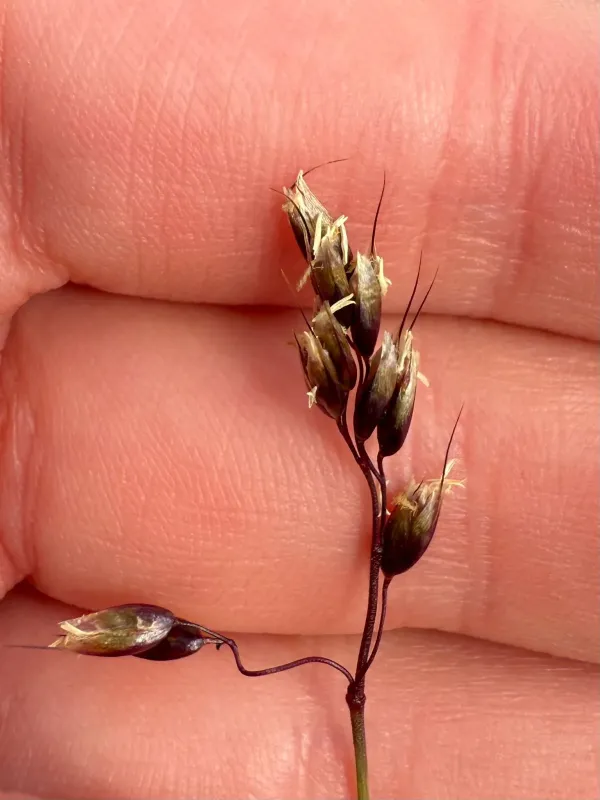
Description
Sowing dates
Sowing of Mountain vernal grass (Anthoxanthum monticola) should ideally be performed in early spring as soon as the soil is moisture-saturated after snowmelt. The optimal soil temperature for seed germination ranges from 8 to 10 degrees Celsius.
To establish a healthy stand, seeds are sown in rows with a spacing of 15–20 centimeters. The planting depth must be kept shallow, typically no more than 1–2 centimeters, as the small seeds require adequate light access to initiate successful germination.
Late autumn sowing is also a viable option, as it allows seeds to undergo natural stratification in the soil. This practice often leads to more uniform and vigorous seedling emergence the following spring, improving overall stand survival.
When incorporating this species into pasture mixes, it is essential to balance the seeding rate to prevent competitive species from overwhelming the slow-establishing vernal grass seedlings. Proper preparation of the seedbed is crucial for consistency.
Following the sowing process, applying light rolling to the soil surface is a vital agronomic step. This ensures optimal contact between the seeds and the soil particles, facilitating efficient moisture uptake, which is critical for the Poaceae family.
Growing requirements
Mountain vernal grass is a resilient member of the Poaceae family, specifically adapted to the challenging environments of alpine and sub-alpine regions. It thrives in well-drained, sandy loam or loamy soils with slightly acidic to neutral pH levels.
This species is highly cold-hardy, making it suitable for regions characterized by long, harsh winters and short growing seasons. It performs best on sites where water drainage is efficient, as it is susceptible to damage from prolonged waterlogging.
The plant performs well in open, sunny locations but shows remarkable tolerance to partial shading in its natural mountainous habitats. It is biologically adapted to cope with significant diurnal temperature fluctuations between day and night.
While its nutrient requirements are relatively moderate, applying mineral fertilizers during the early growth stages can significantly enhance vegetative biomass. Nitrogen, in particular, is beneficial for stimulating healthy tiller development.
As a plant native to mountain slopes, Mountain vernal grass requires excellent soil aeration. A loose, structured soil profile allows for the deep root expansion necessary to anchor the plant and maintain resilience against environmental stress.
Yield
Mountain vernal grass is primarily utilized as a high-quality forage crop for mountain pastures. The total yield of green biomass depends significantly on the annual climatic conditions and the availability of precipitation throughout the growing season.
In favorable years, the crop provides a reliable source of nutritious hay. Due to the presence of coumarin compounds, the harvested grass is known for its pleasant, sweet scent, which effectively enhances its palatability for livestock.
Maximum productivity is typically observed from the second to the third year after planting, once the grass has fully established its extensive root system. Managing the timing of cuts is crucial to maintain high nutritional value in the leaves.
The species demonstrates excellent regrowth potential following grazing, making it an ideal component for managed pastures. Its ability to recover quickly ensures a consistent food supply for grazing animals throughout the season.
Consistent pasture management, including rotation and controlled stocking rates, allows for high productivity over many years. When managed correctly, this grass remains a stable and productive component of high-altitude grassland ecosystems.
Main diseases and pests
Despite its high ecological plasticity, Mountain vernal grass may be affected by rust fungi if agronomic practices are neglected. Excess humidity combined with poor airflow within the stand creates a favorable environment for pathogen development.
Cereal flies and various meadow insects are recognized as potential pests that can cause damage to stems and leaves during the active growth phase. Regular monitoring is necessary to detect and manage these localized infestations promptly.
Overgrazing represents a major threat, leading to stand degradation and the encroachment of less desirable weed species. Maintaining appropriate grazing pressure is essential for the long-term health and survival of the grass.
Disease prevention is primarily achieved through timely mowing or grazing to ensure stand rejuvenation and adequate ventilation. Promoting good air movement around the plant base is the most effective method for controlling fungal infections.
Chemical control is rarely employed in pastures dominated by this species. Instead, an integrated management approach, focusing on site rotation and balanced utilization, remains the most sustainable method for maintaining pasture productivity.
Harvesting
The optimal harvest window for Mountain vernal grass is dictated by the intended use of the final product. For high-quality hay production, harvesting should occur during the early heading stage when the plant maximizes nutrient accumulation.
Mowing should be performed under clear, dry weather conditions to facilitate rapid drying of the windrows. Proper curing ensures the preservation of the characteristic aromatic compounds and essential nutrients required for animal health.
When harvesting for seed, timing is critical to prevent shattering, as mature seeds can easily drop if left too long. Observation of the spikelets changing to a yellowish-brown color is the primary indicator of physiological maturity.
Post-harvest, seed material must be thoroughly cleaned of impurities and dried to a moisture content of no more than 14 percent. Proper storage in cool, dry conditions is essential to maintain high germination rates for future planting seasons.
Residual straw from seed harvesting can be repurposed as bedding or as roughage for low-maintenance livestock. Maximizing the utility of every harvested component significantly improves the overall economic viability of the crop.