
Festuca punctoria
Festuca punctoria
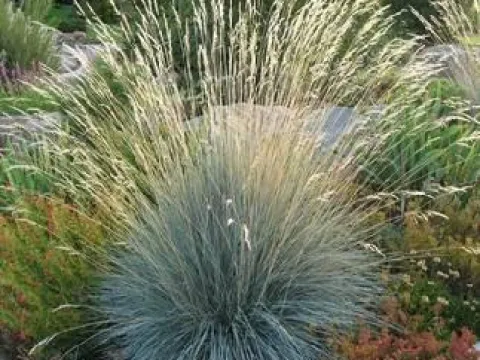
Festuca punctoria, commonly known as prickly fescue, is a perennial grass species belonging to the Poaceae family. Originating from the rocky and arid mountain slopes of the Balkan Peninsula, this plant has evolved to thrive in nutrient-poor and challenging environmental conditions.
What the section contains
Festuca punctoria
The plant grows in dense, cushion-like mounds of stiff, glaucous-blue foliage. Its botanical structure is characterized by rigid, needle-like leaf blades that provide a distinctive prickly texture. This structural integrity allows it to maintain its spherical shape throughout the growing season.
Regarding climate and soil requirements, Festuca punctoria prefers full sun exposure and extremely well-drained substrate. It is highly drought-tolerant once established and does not thrive in heavy, moisture-retentive soils where root rot can quickly develop during winter months.
Cultivation practices should focus on avoiding excess fertilization and irrigation. Providing too many nutrients or too much water encourages rapid, weak growth that ruins the plant's natural compact architecture and decreases its overall longevity and hardiness.
In terms of economic and practical use, Festuca punctoria is exclusively utilized in ornamental horticulture. It is a prized choice for rock gardens, gravel beds, and xeriscaping projects, where its blue coloration and structural resilience provide year-round interest.
The most significant threats to Festuca punctoria are related to excessive moisture. High humidity levels combined with poor drainage frequently lead to fungal pathogens, including root and crown rot, which can prove fatal to the dense, clump-forming root system of the grass.
Pests are generally not a major concern due to the hard, silica-rich leaf texture of the plant. However, during particularly wet springs or in crowded planting conditions, aphid infestations can occur, damaging the new growth before it fully hardens.
Preventive maintenance is key to mitigating threats. Ensuring proper spacing between individual plants is vital to allow for adequate airflow, which prevents the build-up of stagnant air and moisture around the base of the plant during periods of high humidity.
Spring maintenance includes the careful removal of dead leaf material from the center of the mound. This task not only improves the visual appearance of the grass but also eliminates damp hiding spots where pests and pathogens tend to congregate.
In cases of confirmed infection, the application of systemic fungicides is recommended. Monitoring the plant's health after periods of heavy rainfall is essential to catch any issues early, as the species is highly sensitive to persistent saturation of the soil profile.