
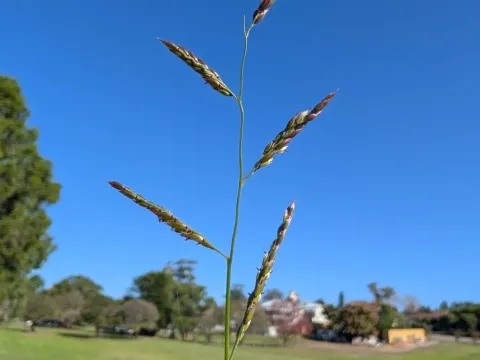
Eriochloa pseudoacrotricha
Eriochloa pseudoacrotricha
Eriochloa pseudoacrotricha is a perennial grass species belonging to the Poaceae family. Native to Australia, this plant is recognized for its significant role in grazing lands and its capacity to thrive in diverse ecological niches.
What the section contains
Eriochloa pseudoacrotricha
The plant exhibits high adaptability to various soil types, preferring well-drained loamy to sandy soils. It is particularly valued for its tolerance to high temperatures and exposure to direct sunlight throughout the growing season.
Climate requirements involve moderate rainfall during the early developmental stages, although the grass demonstrates remarkable drought resistance once the root system is fully established. It thrives best in warm, arid to semi-arid environments.
Botanically, it is identified by its distinct inflorescence, characterized by hairy spikelets typical of the Eriochloa genus. The foliage is succulent and nutrient-dense, making it an excellent source of forage for cattle and sheep.
In terms of agricultural management, the crop serves as an essential component of pasture improvement programs, providing stable biomass production even in areas where other cool-season grasses fail to establish.
The primary threats to Eriochloa pseudoacrotricha include various fungal pathogens that can develop during periods of high humidity, leading to leaf spot and stem necrosis.
Insect pests such as grass aphids and certain types of grasshoppers can cause significant damage if populations are not managed during the active growth phase of the plant.
Effective management strategies require regular field monitoring and the removal of severely affected plant material to prevent the spread of diseases across the pasture.
Weed competition poses a challenge during the initial establishment phase, as the young seedlings are slower to develop and can be easily outcompeted by aggressive invasive weeds.
To ensure long-term sustainability, farmers should implement controlled grazing practices and maintain soil health to bolster the natural resilience of the grass against environmental stressors.