
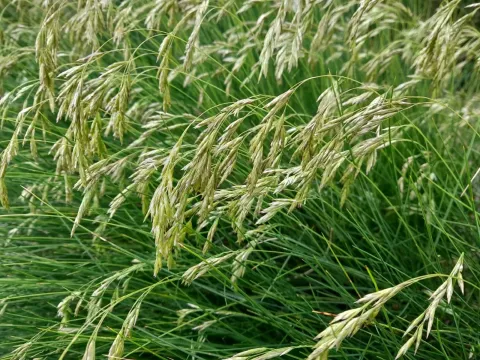
Eskia fescue
Festuca eskia
Eskia fescue (Latin: Festuca eskia) is a perennial grass species belonging to the Poaceae family. The plant is native to the high-altitude mountainous regions of the Pyrenees, where it has evolved to thrive in harsh, alpine environments.
What the section contains
Eskia fescue
Botanically, this species is characterized by its ability to form dense tussocks and a deep, extensive root system. These features make it highly effective for soil stabilization and environmental restoration in difficult terrain.
The plant has low requirements regarding soil fertility. It thrives in poor, stony, and slightly acidic substrates where many other agricultural grasses would fail. It is particularly well-adapted to environments characterized by low nutrient availability.
In terms of climate, Festuca eskia is exceptionally hardy. It demonstrates high resistance to sub-zero temperatures, strong winds, and heavy snow loads. Its biological cycle is synchronized with the short growing season of high-altitude habitats.
Agricultural management for establishing this grass involves careful seedbed preparation. Sowing is usually performed in the early spring, and pressing the seeds into the soil surface is crucial to ensure good germination rates.
The primary agricultural use of Eskia fescue is for phytoremediation and the stabilization of eroded landscapes. Its deep roots and dense growth habit make it an ideal choice for preventing landslides and protecting slopes.
As a forage crop, it provides nutritional value suitable for extensive livestock grazing in mountainous regions. Although it is not as productive as lowland grasses, its reliability in extreme conditions is its main advantage.
The yield of green biomass depends on the site's elevation and moisture content. It is known for its ability to recover quickly after light grazing, making it a sustainable choice for pasture management in sensitive environments.
In addition to agricultural use, the species is valued for its compact growth and attractive leaf color in landscape architecture. It is an excellent candidate for low-maintenance alpine-style gardens and green infrastructure.
Future development of this crop lies in potential selection programs aimed at improving biomass quality. Increasing leaf density while maintaining its inherent hardiness would significantly boost its utility as a mountain forage crop.
The main threats to Festuca eskia include fungal diseases resulting from waterlogged soils or excessive humidity in the root zone. Poor drainage is the most significant factor that can compromise the health of the stands.
Pests such as aphids and larvae of cereal-dwelling insects can affect the stands during particularly warm and humid periods. Regular monitoring and maintaining appropriate sowing density are recommended to minimize pest impact.
Diseases like rusts or powdery mildew are rarely a major problem in its natural high-altitude environment, but they can appear in low-lying, poorly ventilated areas. Preventive measures include ensuring good aeration of the site.
Weed management is only critical during the establishment phase, as the growth of the grass is relatively slow in its first year. Once established, the dense tussocks effectively outcompete most invasive weed species.
Due to its ecological importance in preventing erosion, chemical pest control is generally avoided. Management strategies focus on cultural practices that favor the grass's natural immune response and resilience.