
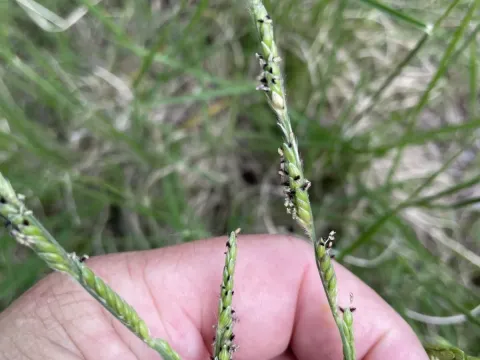
Eriochloa sericea
Eriochloa sericea
Sowing Eriochloa sericea, commonly known as Texas woollygrass, is ideally performed during the spring season once the soil has warmed sufficiently for germination.
What the section contains
Eriochloa sericea
For optimal results, seeds should be sown at a shallow depth, typically not exceeding 1.5 centimeters, to facilitate proper emergence and root establishment.
Seedbed preparation is crucial; the soil should be well-drained and clear of debris to ensure maximum contact between the seeds and the soil surface.
A sowing rate adjusted to local climate and soil conditions is essential to establish a uniform stand capable of competing with invasive vegetation.
Early spring plantings benefit from seasonal rainfall, which provides the necessary moisture for the young seedlings to develop a strong root system.
Eriochloa sericea belongs to the Poaceae family and is a perennial bunchgrass adapted to the fertile and often rocky soils of prairie ecosystems.
The plant demonstrates remarkable drought tolerance, thriving in regions that experience periods of low precipitation during the peak summer months.
It prefers sunny environments and performs best in open grasslands where there is minimal competition from woody species and shading trees.
Soil requirements include good aeration and a neutral to slightly alkaline pH, though it is quite versatile regarding various soil textures.
While hardy, the grass benefits from sound land management practices that prevent soil compaction and promote healthy biological activity in the rhizosphere.
As a forage grass, Eriochloa sericea provides highly palatable green matter that is sought after by both livestock and native wildlife populations.
The yield is generally sustainable, provided that grazing intensity is monitored to prevent overutilization of the plant's basal growing points.
Nutritional analysis shows high protein content throughout the growing season, making it a reliable source of energy for grazing cattle and herbivores.
Regrowth rates are generally rapid following grazing or mowing, allowing for multiple utilization cycles within a single growing season under proper conditions.
Yield stability is one of the key agronomic attributes of Texas woollygrass, ensuring consistent forage availability even in erratic weather conditions.
The primary threats to this grass include fungal pathogens that manifest during periods of high humidity and stagnant air circulation within the stand.
Insect pests such as grasshoppers and various sap-sucking aphids can cause localized damage, particularly during the peak of the plant's vegetative phase.
Improper grazing management is the biggest long-term threat, as persistent overgrazing reduces the plant's vigor and encourages the encroachment of weeds.
Integrated pest management strategies focusing on early detection and spot-treatment are recommended to protect the health of the perennial stand.
Prescribed fire or rotational grazing can be utilized as a natural control method to manage competitive woody species and improve overall ecosystem health.
For hay production, Eriochloa sericea should be harvested during the early heading stage to optimize the balance between biomass volume and nutritional quality.
Equipment calibration is necessary to ensure the cutting height is set to leave enough stubble for the plant's rapid recovery and future growth.
Effective drying of the hay is essential to preserve the structural integrity and vitamin content required for high-quality livestock feed.
Seed harvesting is conducted via mechanical combines when seeds are mature and have reached optimal dryness to ensure high germination rates for future planting.
Proper storage in dry, well-ventilated sheds is required to prevent heat accumulation and the development of mold within the baled material.