
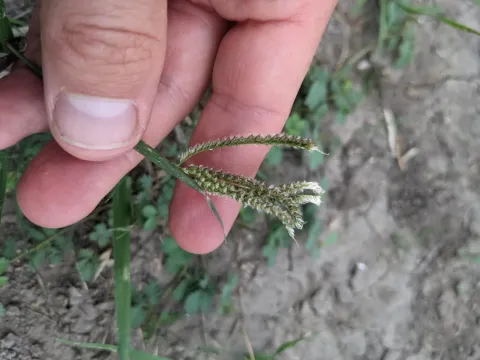
Chloris ciliata
Chloris ciliata
Chloris ciliata is a perennial grass species belonging to the Poaceae family, widely recognized for its adaptability in warm-climate agricultural systems.
What the section contains
Chloris ciliata
Seeding should be performed when soil temperatures are consistently above 20 degrees Celsius, ensuring favorable conditions for rapid germination.
The seedbed must be finely prepared to facilitate the establishment of small seeds, and a depth of 1 to 2 centimeters is generally recommended.
Row planting is standard for field crops to allow for mechanical weeding and proper nutrient distribution during the early vegetative stages.
Once planted, light compaction of the soil improves germination uniformity by ensuring that seeds have direct contact with moisture.
This grass thrives in diverse soil types, ranging from sandy soils to heavier loams, provided that the drainage remains adequate to prevent root rot.
Chloris ciliata exhibits significant drought tolerance, though irrigation during peak growth periods can substantially increase biomass production.
Sunlight is critical for the development of this grass, as it performs poorly in shaded areas, which can lead to thinning of the pasture stand.
The species prefers moderate pH levels (6.0–7.5) and responds positively to nitrogen fertilization, which helps in maintaining density and nutritive value.
Temperature sensitivity is a key factor; as a warm-season grass, it enters dormancy during cold spells and requires warmth for active regeneration.
The yield of Chloris ciliata is influenced by management practices, with rotational grazing proving to be one of the most effective methods for maintaining vigor.
When harvested as hay, the timing of the cut is essential; harvesting before the full bloom stage ensures high protein content and digestibility for livestock.
With sufficient moisture and fertilizer input, the species can produce multiple cuts per growing season, providing a stable source of forage.
Average biomass yields vary based on soil fertility, but intensive management can result in a highly productive pasture capable of supporting heavy grazing.
Long-term yield stability depends on preventing overgrazing, which can exhaust the plant's root reserves and reduce its ability to recover.
Pests such as aphids and leafhoppers pose a threat by feeding on plant sap and potentially transmitting viruses that stunt plant growth.
Fungal pathogens like rusts can affect the leaves, particularly during periods of high humidity, which can detract from the quality of the fodder.
Weed control during the establishment phase is critical, as competitive broadleaf species can easily outcompete the young, slow-growing grass.
Integrated pest management strategies are advised, as they minimize the use of harmful chemicals and protect the beneficial ecosystem around the pasture.
Monitoring for signs of localized infestations is a standard practice to prevent the spread of pests across the entire field.