
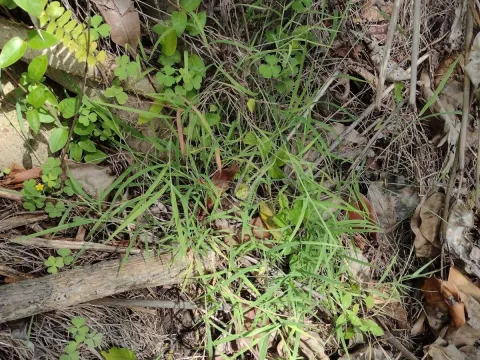
Dichanthium tenue
Dichanthium tenue
Dichanthium tenue is a perennial grass species belonging to the Poaceae family, widely recognized for its resilience and nutritional value in pastoral ecosystems. It is a warm-season grass that thrives in diverse soil conditions.
What the section contains
Dichanthium tenue
Sowing should be performed during the onset of the rainy season to ensure sufficient moisture for successful germination. A well-prepared seedbed is crucial to reduce competition from weeds in the early stages of plant development.
Seeds should be sown at a shallow depth of 1 to 2 centimeters to maximize emergence rates. Row spacing of approximately 20 centimeters is recommended to allow adequate space for root system expansion and tillering.
Initial growth can be slow, requiring careful management to keep the field free of invasive species. Once established, the grass forms a dense mat that effectively competes with weeds and provides a stable foundation for grazing.
The species is highly capable of vegetative propagation, which assists in filling any gaps in the pasture. Consistent monitoring during the first few weeks after sowing ensures that the stand density remains optimal for long-term productivity.
This grass is well-adapted to tropical and subtropical climates, preferring high temperatures for optimal vegetative growth. It performs best under full sunlight, although it possesses some tolerance to partial shading.
Well-drained soils ranging from sandy loams to clays are ideal for this species. It shows remarkable tolerance to a wide range of soil pH levels, making it a versatile choice for various agricultural landscapes.
Dichanthium tenue exhibits good drought tolerance, allowing it to survive dry periods that might kill other, less hardy forage grasses. Its extensive root system helps in extracting water from deeper soil horizons.
Moderate salinity tolerance allows for its cultivation in coastal regions or areas affected by irrigation-related salinization. Proper drainage must be maintained to prevent waterlogging, which the plant does not tolerate well.
Temperature regimes between 25 and 35 degrees Celsius promote the fastest accumulation of biomass. In colder climates, growth rates decrease significantly, necessitating the use of this grass primarily in warmer agricultural zones.
The yield of Dichanthium tenue is highly responsive to fertilization, especially with nitrogen inputs. Under favorable conditions, it can produce substantial amounts of green matter suitable for hay production or direct grazing.
In rotational grazing systems, the yield is optimized by managing stocking rates to prevent overgrazing. This approach ensures that the plants have sufficient time to recover and regrow after being grazed down.
The nutritional content, particularly the crude protein, is highest during the vegetative stage. Farmers should time their cuttings or grazing periods to coincide with this stage to maximize the intake of essential nutrients by livestock.
Regular maintenance, including strategic fertilization and weed control, can significantly increase the total seasonal output. Proper irrigation during dry spells further enhances the potential yield in high-intensity farming operations.
Seed production is consistent and manageable, providing farmers with a reliable source of propagation material. Harvesting seeds at the correct maturity stage is essential to prevent losses due to shattering.
Fungal diseases, such as leaf rust, can be a major challenge during periods of high humidity and rainfall. These pathogens reduce the green surface area of the leaves, thereby limiting photosynthesis and total yield.
Pests like caterpillars and grasshoppers can infest the pasture, causing significant damage to the leaf biomass. Integrated pest management strategies are recommended to keep populations below economic injury levels.
Root rot is a common risk in poorly drained fields, leading to patches of dead grass and reduced stand density. Improving field drainage is the most effective preventative measure against these soil-borne threats.
Weed encroachment is a persistent threat if the pasture is under-grazed or poorly managed. Regular monitoring allows for the early detection and management of invasive species before they become dominant.
Soil nutrient depletion can make the crop more susceptible to environmental stresses and diseases. Periodic soil testing and appropriate fertilization regimes are necessary to maintain plant vigor and resistance.
For hay production, cutting should occur just before the flowering phase to capture the peak nutritional quality of the plant. This prevents the stems from becoming too fibrous and indigestible for cattle.
Rapid drying of the cut biomass is necessary to prevent nutrient losses caused by cell respiration. Mechanical conditioning of the cut material helps to speed up the moisture removal process in the field.
Grazing should be managed through paddock rotation to allow for vegetative rest periods. This practice promotes deep root growth and longevity of the grass stand, ensuring productive use over several years.
Seed harvesting is performed using combine harvesters set specifically for small-seeded forage crops. Proper cleaning and drying of the harvested seeds are vital for maintaining germination quality during storage.
Leaving a stubble height of at least 5 centimeters during harvest or grazing is crucial for plant recovery. This residual vegetation protects the soil from erosion and serves as a base for rapid regrowth.