
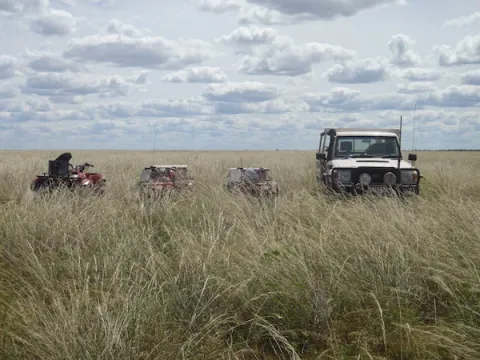
Dichanthium fecundum
Dichanthium fecundum
Dichanthium fecundum is a perennial grass species belonging to the Poaceae family, widely recognized for its high adaptability and productive potential in tropical climates.
What the section contains
Dichanthium fecundum
Sowing should be performed at the start of the wet season to ensure sufficient moisture for the seeds to germinate effectively and establish a root system.
Optimal soil preparation involves shallow tillage to create a clean seedbed, as the seeds are small and require close contact with soil particles to germinate.
The plant spreads via stolons, meaning that initial planting density can be moderate, allowing the grass to fill in spaces over the subsequent growing months.
In regions where moisture is reliable, seeding can be performed using standard agricultural machinery, though hand-broadcasting remains common in smaller pastoral systems.
This species is well-suited for tropical and subtropical regions, thriving in warm environments where temperatures remain conducive to rapid plant growth.
Dichanthium fecundum is noted for its ability to grow on heavy clay soils, showing superior performance in areas prone to seasonal waterlogging compared to other grasses.
It requires high solar exposure to maintain productivity; shaded environments lead to decreased biomass production and an increased risk of disease development.
While tolerant of low-fertility soils, the application of nitrogenous fertilizers significantly boosts leaf production, making it an excellent candidate for managed pastures.
The grass exhibits moderate drought tolerance once established, though its primary agricultural value lies in its resilience to wet and periodically flooded soils.
The total forage yield of Dichanthium fecundum is highly dependent on the grazing frequency and the nitrogen availability within the pasture management system.
Under rotational grazing, this species can maintain high levels of green biomass production throughout the growing season, providing a reliable food source for livestock.
Nutritional value is highest during the vegetative stage, emphasizing the importance of timely grazing or cutting to prevent the grass from reaching maturity.
The grass is known for its quick regrowth after grazing, which allows for multiple utilization cycles within a single year under favorable climatic conditions.
Yields can be maximized in irrigated systems, where the plant can serve as a primary forage source in high-intensity livestock farming operations.
The primary threats include fungal diseases such as leaf rust, which can proliferate rapidly in environments characterized by high humidity and stagnant air circulation.
Insect pests, including various caterpillars and soil-dwelling larvae, may target the stolons and young shoots, potentially hindering the establishment phase of the stand.
Management practices, such as maintaining appropriate stocking rates, are essential to prevent overgrazing, which can degrade the root structure and encourage weed intrusion.
Weed competition is a significant concern during the first months after sowing, necessitating proactive measures to ensure the grass successfully captures its territory.
Integrated pest management, including monitoring and biological control, is preferred over broad-spectrum pesticide use to maintain pasture ecosystem health.
The grass is primarily utilized through direct grazing, as it has a high tolerance for the intensive trampling and grazing pressure exerted by livestock.
When harvesting for hay, it is crucial to cut the stand before flowering to ensure the harvested material retains maximum protein content and palatability.
Proper drying is essential, as the dense nature of the stem structure requires efficient aeration to prevent spoilage during the curing process before baling.
Seed harvesting is conducted when the inflorescences reach maturity, though producers must be mindful of the natural shattering characteristic of the mature seeds.
Post-harvest maintenance, including field cleaning and occasional light fertilization, supports rapid recovery and ensures productivity in the next production cycle.