
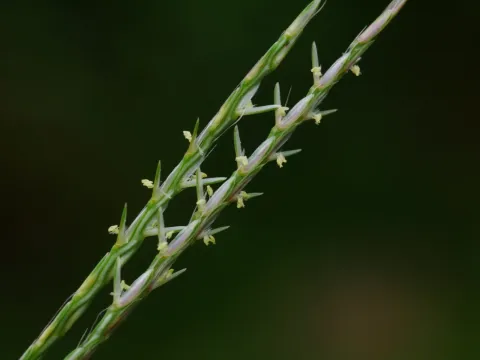
Dimeria
Dimeria
The genus Dimeria belongs to the Poaceae family and consists of various grass species. Sowing typically occurs in regions where the climate provides stable warm conditions, essential for the germination of these seeds.
What the section contains


Dimeria
Timing the sowing phase is critical, as the soil temperature must reach a sufficient level to support rapid seedling development. Farmers often schedule planting once the threat of cold snaps has passed completely.
Due to the small size of the seeds, they are usually sown at a shallow depth. Precision drills are recommended to ensure uniform distribution and to avoid burying the seeds too deeply.
Establishing an appropriate plant density is important for competitive success. When sowing for pasture, lower densities are often preferred to allow for natural spread and tillering.
Soil preparation before sowing involves clearing debris and loosening the topsoil, which encourages robust root growth and establishment during the initial germination phase.
Dimeria is highly adaptive to sunlight and thrives in open, sunny locations. Shaded areas significantly limit its growth potential and can result in weaker plant structures.
The culture performs best in well-drained soils, ranging from sandy loams to clay soils. While it can tolerate slightly nutrient-poor soil, fertilization helps maximize its vegetative output.
Water requirements are relatively high during the active growing season. Adequate moisture is essential during the tillering and biomass production phases to ensure high yields.
Temperature range is a vital factor, with the plant showing optimal growth between 22 and 30 degrees Celsius. Excessive heat or prolonged cold can severely hinder physiological development.
Maintaining a balanced soil pH, ideally in the neutral range, promotes nutrient uptake and improves overall plant health and resilience against environmental stress.
The yield of Dimeria is highly dependent on agricultural practices and soil fertility. Under intensive management, multiple harvests can be achieved within a single season.
Its biomass is valued for its nutritional profile, making it a reliable choice for forage and grazing. The quality remains highest when harvested during the early stages of maturity.
Regular nutrient application, particularly nitrogen, stimulates vigorous tillering and increases the total weight of the green matter harvested from a specific area.
Productivity metrics are enhanced when moisture is effectively managed. Proper irrigation scheduling can prevent growth plateaus during dry spells.
Monitoring the growth cycle allows producers to optimize harvest times, balancing the need for total biomass volume with the requirement for high-quality animal nutrition.
Like many members of the grass family, Dimeria can be susceptible to fungal diseases such as rust. Rotating crops and using resistant varieties are effective management strategies.
Pests that target stem and leaf tissues can impact productivity. Integrated pest management, including regular scouting, helps maintain healthy stands.
Weed competition is particularly challenging during the establishment phase. Using selective herbicides or mechanical weeding ensures that the crop has sufficient resources to thrive.
Waterlogged soil conditions can lead to root diseases. Ensuring proper drainage is a critical preventive measure against these moisture-related threats.
Treating seeds before planting is a standard practice to reduce the prevalence of soil-borne pathogens and ensure a uniform, healthy crop stand from the start.
Harvesting for silage or green feed is best performed before the plant reaches full lignification. At this stage, the forage is most digestible and nutritionally dense.
When producing hay, the crop is dried to reach a target moisture level, which preserves its quality and prevents degradation during storage in bales or stacks.
For seed production, harvesting is delayed until the heads reach full maturity. Careful timing is needed to minimize loss due to shattering and weather-related factors.
Modern harvesting machinery plays a key role in maximizing efficiency. Using mowers with conditioners speeds up the drying process and improves the quality of the end product.
Post-harvest management is essential for long-term productivity. Clearing residues and providing proper care post-cutting helps the plants recover and prepare for the next growth cycle.