
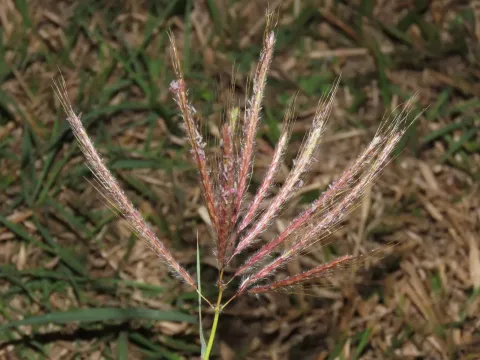
Dichanthium papillosum
Dichanthium papillosum
Dichanthium papillosum is a perennial grass species belonging to the Poaceae family. Native to tropical regions of Africa and parts of India, this plant is recognized as a significant component of grasslands in arid and semi-arid zones.
What the section contains
Dichanthium papillosum
The plant is highly drought-tolerant, exhibiting a biological mechanism that allows it to survive in harsh climatic conditions where many other forage crops would perish. It thrives in various soil types, proving its resilience in both clayey and slightly saline environments.
Botanically, it features strong root structures and a tufted growth habit. The stems are sturdy, and the foliage remains green and nutritious for longer periods compared to native grasses in the same habitat, making it a preferred choice for grazing.
It requires high solar exposure to reach its maximum productivity. In agricultural settings, it is best grown in open fields where it can compete effectively with invasive weeds due to its rapid growth rate during the rainy season.
The primary agricultural use is for livestock grazing. Its nutritional profile, coupled with high biomass production, makes it an excellent choice for improving pasture quality and supporting sustainable animal husbandry in tropical climates.
Common fungal diseases, such as rust and smut, are the primary biological threats to Dichanthium papillosum, particularly during humid seasons that promote spore germination.
Various insect pests, including stem borers and grasshoppers, can cause localized damage to the leaves and stems, leading to reduced biomass yield and plant vigor.
Poor drainage conditions can lead to root rot, which is a significant issue if the crop is planted in low-lying areas susceptible to seasonal waterlogging.
Overgrazing poses a major threat to the plant's long-term survival, as constant defoliation without sufficient recovery periods exhausts the energy reserves stored in the roots.
Effective management strategies, including grazing rotation and the periodic application of fertilizers, are crucial for maintaining the health and productivity of the pasture over several years.