
Desmostachya
Desmostachya
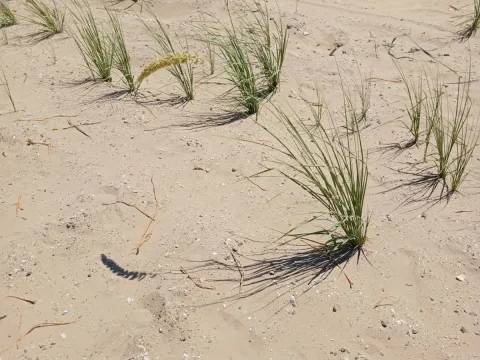
Desmostachya (Desmostachya bipinnata) is a perennial grass species belonging to the Poaceae family. It is widely recognized for its robust nature and ability to thrive in extremely arid and semi-arid environments across Africa and Asia.
What the section contains

Desmostachya
The plant is anatomically adapted to survive in sandy and saline soils, possessing a deep and extensive root system that allows it to tap into moisture reserves far below the surface of the soil.
Optimal growth for Desmostachya requires abundant sunlight and high thermal units. It is highly resistant to heat stress, making it an ideal candidate for stabilization of shifting sands and marginal lands.
From an agricultural standpoint, it serves as a reliable ground cover. Its ability to withstand high salt concentrations makes it particularly useful for managing saline soils where other commercial crops fail to develop.
Its utility extends to fodder production, especially in subsistence farming contexts, and as raw material for local crafts, including weaving mats, baskets, and traditional roofing materials.
Desmostachya is notably resilient to many common agricultural pathogens. Due to its silica-rich leaves and fibrous structure, it maintains a strong defensive barrier against various fungal and bacterial infections.
The primary biotic risks involve soil-dwelling insects that target the root zone during the establishment phase, which can stunt growth and reduce the overall density of the plant population.
Excessive water accumulation around the roots, caused by poor drainage, remains the most significant environmental threat to the plant's health, often leading to physiological stress and root rot.
While foliage-feeding insects like locusts may occasionally inhabit the stands, they rarely cause devastating damage to mature plants due to the toughness of the grass tissue.
Successful management of this crop requires a focus on preventing waterlogging and performing periodic site inspections to ensure that weed competition remains low during the early vegetative stages.