
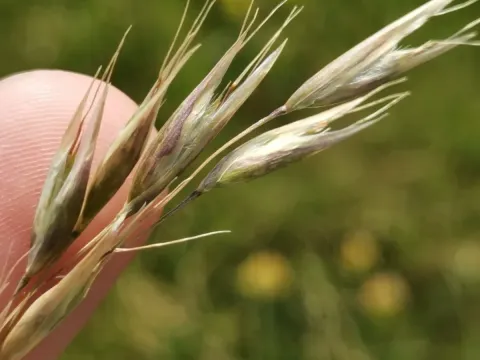
Alpine heathgrass
Danthonia alpina
Alpine heathgrass (Danthonia alpina) is a hardy perennial grass species belonging to the Poaceae family. Native to mountainous regions, this plant is well-adapted to high-altitude environments characterized by thin soils and challenging climatic conditions.
What the section contains
Alpine heathgrass
Botanically, it features a tufted growth habit with robust root systems that are efficient at extracting nutrients from rocky substrates. This adaptation makes it an excellent candidate for soil conservation and erosion control on steep terrain.
The crop thrives in well-drained, slightly acidic to neutral soils. It requires significant solar exposure to reach full maturity and produces high-quality forage during the peak summer growing season.
Climate requirements include distinct temperature variations, as the plant needs a period of winter dormancy to initiate vigorous spring regrowth. It is highly resistant to frost and cold-induced stress, surpassing many lowland forage species in survival capabilities.
In agricultural practice, it is utilized primarily for extensive livestock grazing. Its nutritional profile makes it a reliable feed source in regions where intensive agricultural techniques are difficult to implement due to topography.
The most common biological threats to Danthonia alpina include rust fungi, which typically appear during periods of high atmospheric humidity and inadequate air circulation within the stand.
Invertebrate pests, such as grass-feeding larvae and specific species of aphids, can reduce overall biomass production if not monitored during the critical early growth stages.
Management strategies involve keeping the canopy open through rotational grazing or periodic harvesting, which helps minimize the microclimate conditions that favor pathogen proliferation.
Root rot remains a concern in poorly drained areas, especially during wet springs where water stagnation limits root respiration and encourages fungal activity.
Integrative pest management, focusing on biological controls and maintaining stand vigor, is the most effective approach for preserving the long-term productivity of the grass.