
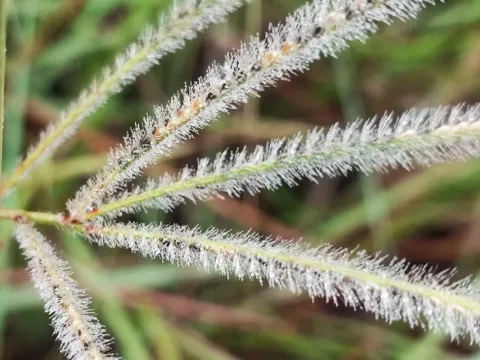
Axonopus aureus
Axonopus aureus
Axonopus aureus, commonly known as golden carpet grass, is a perennial plant species belonging to the Poaceae family. It is native to the tropical and subtropical regions of South America, where it thrives in varied climates.
What the section contains
Axonopus aureus
The species is well-regarded in agronomy for its remarkable ability to grow on poor, acidic, and sandy soils, making it an excellent candidate for land reclamation and soil stabilization.
It prefers full sun exposure to maintain its growth density and characteristic golden-hued inflorescences. The plant exhibits moderate drought tolerance, which is supported by a robust and efficient root system.
Botanically, it is characterized by its spreading growth habit and firm, narrow leaf blades. It acts as a ground cover, effectively preventing soil erosion through its thick mat formation.
Agronomic requirements are low, focusing primarily on managing soil pH and ensuring that the pasture is not overgrazed during the early stages of establishment.
The primary agricultural use of Axonopus aureus is as forage for extensive grazing systems, particularly in regions where other crops might struggle to survive.
It is capable of producing a consistent yield of biomass, which serves as a supplemental food source for cattle and other livestock roaming in tropical pasture systems.
The nutritional value of the grass is sufficient for sustaining grazing herds, provided the land is managed with appropriate rotation schedules to allow for recovery.
Beyond forage, the plant contributes to maintaining the structural integrity of the soil, preventing surface runoff, and enhancing the overall biodiversity of grazing lands.
Sustainable yield management involves balancing the stocking rate to ensure the longevity of the grass stand and preventing the encroachment of unwanted weeds.
Like many tropical grasses, Axonopus aureus can be susceptible to various fungal pathogens that thrive under conditions of high humidity and poor air circulation.
Insect pests, such as grass-feeding caterpillars and leafhoppers, may cause damage to the foliage, which can potentially lead to a reduction in biomass production if left unmanaged.
Effective threat management involves regular scouting of the pasture to identify potential outbreaks of pests or diseases at an early stage.
Cultural practices, such as maintaining appropriate sward height and avoiding excessive soil compaction, are key to preventing the spread of common grass diseases.
Integrated pest management strategies are recommended to keep the forage quality high while maintaining the ecological health of the grazing area.