
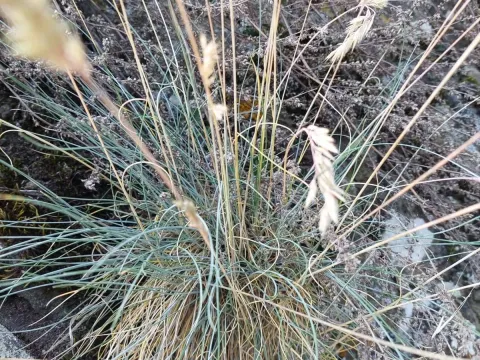
Auvergne fescue
Festuca arvernensis
Auvergne fescue is typically propagated via seeds or by dividing established clumps in the spring. Sowing seeds directly into well-prepared, loose soil should be done when temperatures consistently exceed 15 degrees Celsius.
What the section contains
Auvergne fescue
When sowing, ensure that seeds are covered with only a thin layer of soil, as light is beneficial for optimal germination. Consistent moisture is required during the first few weeks until the seedlings develop a robust root system.
For vegetative propagation, dividing the clumps every three to four years helps maintain the vigor of the plant. This process is best performed in early spring or autumn to allow for rapid establishment before extreme temperatures.
Planting density should be carefully considered based on the desired visual effect. Spacing plants about 20–30 centimeters apart allows for air circulation while creating a continuous ground cover over time.
Successful establishment depends on controlling competing weeds during the seedling stage. Once the grass is fully established, its density usually prevents most opportunistic weeds from taking hold.
Festuca arvernensis, a member of the Poaceae family, is a perennial bunchgrass native to rocky and mountainous regions, which dictates its preference for well-drained, nutrient-poor substrates.
This species thrives in full sun, which is essential to maintain its characteristic glaucous blue-gray leaf color. In shaded conditions, the plant tends to lose its compact, mounded shape and becomes leggy.
The plant is highly drought-tolerant once established and does not require frequent irrigation. It is exceptionally well-suited for rock gardens, xeriscaping, and areas with sandy or stony soil profiles.
Climate adaptability is one of its primary strengths. The Auvergne fescue exhibits high cold hardiness, surviving winter temperatures common in many temperate regions without the need for special protection.
Soil fertility requirements are low. Heavy fertilization is generally counterproductive, as it encourages excessive vegetative growth that can weaken the plant's structural integrity and aesthetic appeal.
The most significant threat to the health of Festuca arvernensis is poor drainage. Chronic waterlogging leads to crown and root rot, which is often fatal to this drought-adapted species.
Pests are generally not a major concern; however, during extended periods of heat and drought, aphids may occasionally infest young growth, though rarely to an extent that requires chemical intervention.
Fungal diseases like rust or powdery mildew are usually indicative of poor air circulation or excessive humidity in the immediate environment. Thinning out plants can rectify these issues effectively.
Maintaining a clean center in the clumps is crucial for long-term health. Dead foliage accumulation provides a habitat for pests and promotes trapped moisture, increasing the risk of rot.
Regular maintenance involves light grooming each spring to remove senescent leaves. This practice encourages fresh, dense regrowth and ensures that the plant retains its signature neat, mounded form.