
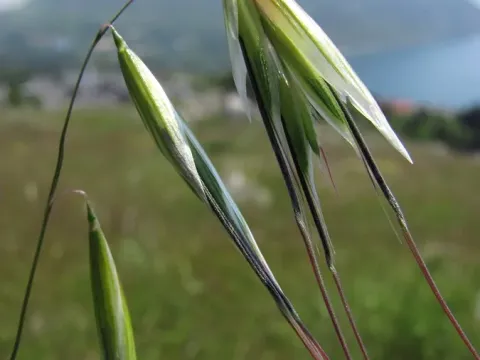
Avena clauda
Avena clauda
Avena clauda is a species of wild grass belonging to the Poaceae family, known for its distinct morphology and high resilience in adverse environmental conditions. As a wild relative of the common cultivated oat, it serves as an essential subject in genetic research aimed at improving modern grain crops.
What the section contains
Avena clauda
The native habitat of Avena clauda includes regions of the Mediterranean basin, the Middle East, and parts of Central Asia. It thrives in various landscapes, from mountain slopes to arid steppe zones, demonstrating remarkable adaptability to different climatic regimes without human intervention or agricultural care.
Botanically, Avena clauda is characterized by a specific panicle structure and awn development that distinguishes it from other wild oat species. Its ability to complete its life cycle under conditions of extreme water deficit is a key adaptive trait, allowing it to survive in environments where moisture is limited.
In terms of soil requirements, this species is undemanding and can be found growing in poor, rocky, or sandy substrates. It does not require high levels of fertilization to proliferate, making it a robust species that displays significant tolerance to poor soil quality and nutrient deficiency.
The primary economic and agronomic significance of Avena clauda lies in its role as a genetic reservoir. Breeders utilize its wild traits to introgress genes responsible for drought tolerance, salt stress adaptation, and general robustness into domestic oat varieties, helping to secure food stability in changing climates.
Avena clauda is susceptible to several pathogens typical for the Avena genus, including rusts and smuts. These fungal diseases can significantly impact the vegetative growth and seed production of the plants, particularly in seasons with high humidity that promote the spread of fungal spores in the wild.
Insect pests such as cereal aphids and various fly larvae also pose threats to the species. These pests can damage the stalks and developing seeds, which serves as a natural population control mechanism in the wild, though it remains a concern for researchers attempting to propagate the species for studies.
Effective management in experimental plots involves regular phytosanitary inspections and localized treatments to maintain the health of the research specimens. Researchers prioritize integrated pest management (IPM) strategies that minimize the use of harsh chemicals while protecting the genetic integrity of the samples.
Environmental threats such as overgrazing or land transformation can also impact local populations. As natural habitats disappear, ex-situ conservation efforts, such as storing seeds in gene banks, become vital to preserving the unique genetic traits that Avena clauda offers for future agricultural improvements.
Studying the interactions between this plant and its natural pathogens provides invaluable insights into disease resistance mechanisms. Understanding how Avena clauda survives these threats in the wild helps scientists develop more robust and disease-resistant cultivars for commercial agricultural production.