
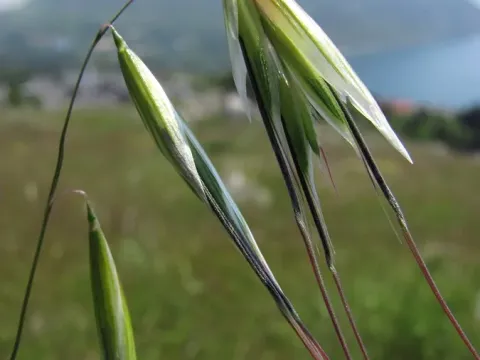
Avena eriantha
Avena eriantha
Avena eriantha, known as a species of wild oat, belongs to the Poaceae family. It is a resilient annual grass that plays a significant role in studies concerning the genetic improvement of cultivated oats.
What the section contains
Avena eriantha
The species originates from the Mediterranean basin, the Caucasus, and parts of the Middle East. It thrives in diverse habitats, including rocky slopes, meadows, and semi-arid grasslands, demonstrating a high level of environmental adaptation.
Botanically, it is characterized by fine hairs on the glumes and florets. The plants exhibit a typical grass morphology with slender stems and leaves, capable of producing significant biomass in varied environments.
The crop requires well-drained soil and prefers environments with sufficient sunlight. It is particularly valued for its tolerance to drought, making it suitable for regions where moisture availability is limited.
Economically, Avena eriantha is primarily utilized as a genetic donor for breeding programs aiming to develop drought-resistant cultivars and as a constituent of natural grazing lands in its native range.
Like many species within the Avena genus, this plant is susceptible to fungal pathogens such as leaf rust and powdery mildew, particularly in humid microclimates.
Common insect pests include cereal aphids and various types of grain beetles, which can impact the vegetative vigor of the crop during the early stages of development.
Management of these threats involves maintaining optimal planting densities and monitoring fields for signs of infestation to minimize potential losses in forage quality.
As a wild relative, the species often displays inherent resistance to local pests, providing a natural buffer that can be leveraged in breeding programs.
Implementing proper soil cultivation practices helps in reducing the persistence of soil-borne pathogens and ensures healthy crop establishment throughout the growing season.