
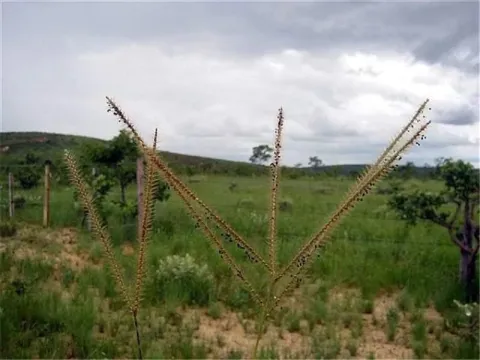
Axonopus canescens
Axonopus canescens
Axonopus canescens is a robust perennial grass belonging to the Poaceae family. It is widely recognized in agricultural circles for its resilience and ability to thrive in demanding environmental conditions where other forage species often fail.
What the section contains
Axonopus canescens
Originating from the tropical landscapes of the Americas, this species has adapted to survive in diverse soil conditions. It is particularly noted for its exceptional tolerance to low-fertility soils and high acidity, making it a valuable crop for land reclamation.
The plant grows as a low-stature grass that forms dense swards. This growth habit makes it an excellent choice for stabilizing soil, effectively preventing erosion on slopes and in areas subjected to high rainfall intensity.
Regarding climate requirements, the grass prefers warm, humid environments but demonstrates significant flexibility. It requires adequate sunlight to maintain its density but can cope with varying levels of rainfall, provided the drainage is sufficient to prevent root rot.
In terms of agricultural utility, it is primarily used as high-quality forage for livestock. Its ability to regrow rapidly after grazing allows for intensive management of pasture rotations, ensuring a reliable feed supply throughout the growing season.
The primary health threats to Axonopus canescens are fungal pathogens, particularly those causing leaf spot diseases. These are most prevalent during prolonged periods of high humidity when the canopy remains damp for extended periods.
Insect pests such as aphids and various grass-feeding beetles can also impact yield. While generally hardy, the plant can suffer from decreased biomass production if pest populations reach high levels during critical developmental stages.
Effective management strategies focus on preventing disease outbreaks through proper pasture maintenance. This includes avoiding overgrazing, which can weaken the plants and reduce their natural ability to fend off pathogens.
Crop protection also involves the strategic use of mowing to manage the sward height. Removing older, less productive foliage ensures that the crop remains in a vigorous, vegetative state that is less susceptible to pest attacks.
Integrated pest management remains the most sustainable approach. By maintaining healthy soil fertility and utilizing appropriate grazing intervals, farmers can minimize the need for chemical interventions and ensure the long-term productivity of their grasslands.