
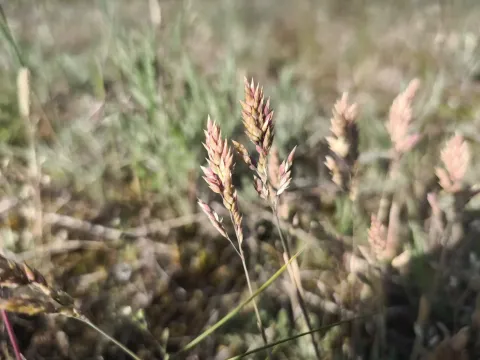
Baden bluegrass
Poa badensis
Baden bluegrass (Poa badensis) is a perennial grass species belonging to the Poaceae family, recognized for its exceptional resilience in dry and rocky environmental conditions.
What the section contains
Baden bluegrass
Originating from the central parts of Europe, this plant is primarily found on limestone cliffs and arid meadows, demonstrating a specialized adaptation to nutrient-poor and calcareous soil environments.
The botanical structure of the species is defined by dense tussock formation, which provides significant structural benefits for soil conservation, preventing erosion on steep, unstable landscapes.
In terms of agricultural requirements, this species demands excellent drainage and aerated soil, as it is highly susceptible to root damage caused by waterlogging or poor substrate porosity.
While not a primary crop for intensive forage production, it is highly valued in ecological engineering and land restoration projects aimed at reclaiming abandoned or degraded rocky fields.
The primary pathological threats to Baden bluegrass involve various fungal infections, particularly rusts and powdery mildew, which occur when ambient humidity remains consistently high.
In terms of entomological pests, the culture is prone to damage from soil-dwelling larvae that feed on young root systems during the early developmental phases of the plant.
The establishment phase is often challenged by competition from faster-growing invasive weeds, which can shade out the slowly emerging bluegrass seedlings if not managed properly.
Climate-related threats include severe frost damage in areas without snow cover, though the species generally possesses high inherent hardiness against low winter temperatures.
Excessive grazing pressure can significantly degrade the quality of the stand, leading to a loss of the protective dense turf and making the area vulnerable to further erosion.