
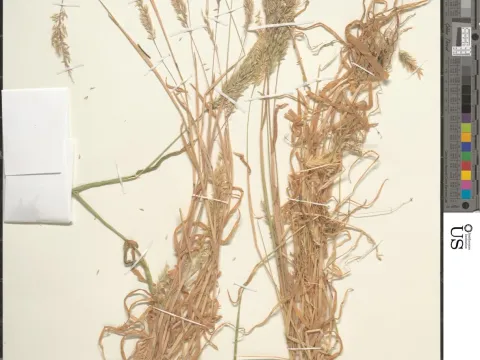
Annual soft grass
Holcus annuus
Annual soft grass (Holcus annuus) is a plant species that follows a distinct annual life cycle. Sowing usually occurs in early spring, once soil temperatures have consistently risen above 10 degrees Celsius, ensuring rapid germination.
What the section contains
Annual soft grass
Proper soil preparation is crucial for success. The seeds are small and should be sown at a shallow depth, typically 1 to 2 centimeters, to facilitate early emergence and prevent energy depletion of the seedlings.
In managed agricultural environments, drilling is preferred over broadcast seeding to achieve uniform spacing. This reduces intra-species competition and allows each plant to maximize its growth potential throughout the season.
For re-seeding natural grasslands, the plant relies on natural seed drop. However, supplemental overseeding can be conducted in early spring to thicken the stand in areas where the population has declined.
Timely sowing ensures that the plant develops a robust root system before the onset of summer drought, allowing it to compete effectively with other opportunistic plant species in the field.
As a member of the Poaceae family, annual soft grass is well-adapted to various environmental conditions. It thrives in open, sunny environments where it is not overshadowed by taller, more aggressive vegetation.
The species demonstrates high soil adaptability, growing well in sandy, loamy, and even slightly degraded soils. It prefers well-drained conditions but can tolerate moderate moisture fluctuations during its growth phase.
Soil pH should ideally be neutral or slightly acidic. While it does not require intense fertilization, moderate levels of nitrogen and phosphorus can significantly enhance biomass production, especially in nutrient-depleted sites.
Aeration is a key requirement for healthy root development. In heavily compacted soils, growth is stunted, and the plant becomes more susceptible to environmental stress, including drought or waterlogging.
The plant is highly adaptable to temperate climates. It avoids extreme heat by completing its life cycle rapidly, ensuring it can produce viable seeds before the hottest months of the summer season arrive.
The biomass yield of annual soft grass is largely determined by the timing of harvest and environmental conditions. Under optimal moisture levels, it produces a dense stand suitable for hay production.
Productivity is most efficient when the grass is harvested before it reaches full maturity. At the heading stage, the nutritional content is highest, providing a good source of fiber and energy for grazing livestock.
Because it is an annual species, total seasonal yield is concentrated within a short period. This makes it an ideal "catch crop" or an addition to forage mixtures meant to improve pasture quality in the short term.
In addition to hay, the plant contributes to pasture productivity by providing high-quality grazing material. Livestock readily consume the young, succulent foliage, which supports healthy growth rates in cattle and sheep.
To maximize yields, weed control during the early stages of growth is essential. By eliminating competitive weeds, the stand of annual soft grass can establish more effectively and produce a uniform crop for harvest.
Annual soft grass is susceptible to common cereal diseases, including various species of rust and powdery mildew. These pathogens can significantly reduce the foliage quality if environmental conditions are humid and cool.
Pests such as aphids and grass-feeding flies present a notable threat during the seedling stage. These insects can cause damage by feeding on stems or sucking cell sap, which weakens the plant and limits its development.
Integrated Pest Management (IPM) practices are recommended to mitigate these risks. This includes monitoring the fields and applying biological or chemical treatments only when pest populations reach critical economic levels.
Rodents can also pose a threat by damaging roots in early spring, potentially destroying large patches of the crop. Maintaining a clean field perimeter can help reduce the incidence of such pest infestations.
Crop rotation serves as a primary defensive strategy against disease buildup. By alternating with non-Poaceae crops, farmers can disrupt the life cycles of pathogens and pests specific to the Holcus genus.
The harvest strategy for annual soft grass focuses on maximizing nutritional quality. For hay, the ideal window is during the early flowering phase, as this ensures the best balance of protein and digestibility.
Modern mowing and conditioning equipment is recommended to speed up the drying process. Once cut, the grass should be raked into windrows to facilitate even drying and prevent mold development in the stored product.
If the objective is seed collection, the harvest must be delayed until the seeds are fully mature. Care must be taken to prevent shattering, which occurs when the seeds are at their driest, so harvesting in the early morning is advised.
Proper storage is essential to maintain feed value. Hay must be kept in a dry, well-ventilated structure to prevent spoilage and ensure it remains safe for livestock consumption throughout the winter season.
After harvesting, the remaining stubble can be lightly disked back into the soil. This practice helps recycle nutrients and promotes the incorporation of seeds into the soil surface for the next season's growth.