
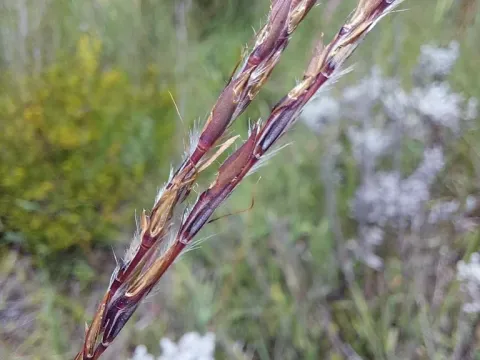
Andropogon schirensis
Andropogon schirensis
Andropogon schirensis is a perennial grass belonging to the Poaceae family. This species is widely recognized for its robust nature and its role as a significant component of tropical and subtropical grasslands, particularly within the African continent.
What the section contains
Andropogon schirensis
The plant originates from the tropical savanna regions, where it has evolved to thrive under intense heat and periodic drought. Its physiological mechanisms allow it to remain dormant during the dry season and resume rapid growth immediately following the onset of rainfall.
Regarding soil requirements, the species performs best on well-drained, sandy, or stony soils. It shows a strong intolerance to waterlogging, as the root system requires adequate aeration to prevent rot, making topography and soil texture critical for successful establishment.
Botanically, it forms dense tufts, which help mitigate soil erosion and maintain moisture levels in the immediate vicinity of the crown. The foliage is characteristically tough, an adaptation that allows the plant to endure high solar radiation and grazing pressure.
In agricultural practice, Andropogon schirensis is primarily utilized for livestock grazing. It serves as a vital forage resource in regions where other fodder grasses may struggle due to nutrient-poor soils or erratic precipitation patterns.
Common biological threats include various fungal pathogens such as rusts and leaf spots. These diseases typically manifest during periods of high humidity and can significantly compromise the photosynthetic capacity and nutritional value of the foliage.
Insect pests, including various species of grasshoppers and lepidopteran larvae, represent a major threat to leaf biomass. Effective management strategies often involve controlled burning or rotational grazing to minimize the impact of these infestations on plant vigor.