
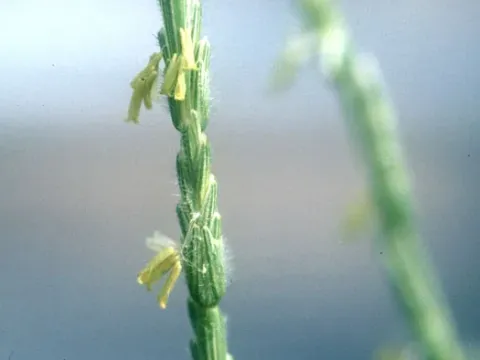
Aegilops mutica
Aegilops mutica
Aegilops mutica is a wild grass species belonging to the Poaceae family. This plant is known for being a close relative of bread wheat, which makes it an indispensable object for agricultural research and modern crop genetics.
What the section contains
Aegilops mutica
The native habitat of this species is primarily concentrated in the mountainous and steppe regions of Turkey. It thrives in harsh environments characterized by rocky soils and fluctuating climatic conditions that would be challenging for most domesticated crops.
The plant demonstrates significant tolerance to poor soil quality. It can grow efficiently in rocky substrates with low organic matter, leveraging its specialized root system to extract necessary minerals in nutrient-limited environments.
Regarding climate, Aegilops mutica is well-adapted to arid and semi-arid conditions. Its developmental cycle is synchronized with seasonal precipitation, allowing it to complete its vegetative growth before the onset of extreme summer heat.
The primary economic and scientific application of this species is in cereal breeding programs. It serves as a vital source of genetic traits, including resistance to abiotic stressors and various fungal diseases, which are then integrated into modern wheat cultivars.
As a wild progenitor of wheat, Aegilops mutica maintains a robust natural defense mechanism against many common cereal diseases. Nevertheless, it remains susceptible to specific rust pathogens that can thrive in specific environmental conditions.
Insect pests, including cereal aphids and leafhoppers, pose a notable threat to the plant's physiological development. These insects extract sap from the leaves and stems, potentially weakening the plant and reducing the overall reproductive success.
Smut infections can occur if the local population density becomes high or if environmental conditions favor fungal sporulation. Protecting the seed-bearing spikes from such pathogens is critical for maintaining the genetic purity of the species.
Effective management against threats involves routine field monitoring of the plant populations. Early identification of pest clusters or disease symptoms allows for localized interventions that do not disrupt the surrounding ecological balance.
Agricultural techniques focusing on soil structure and appropriate plant spacing contribute to better disease resistance. Maintaining a healthy stand is the most effective way to minimize the impact of pests and ensure the survival of the species.