
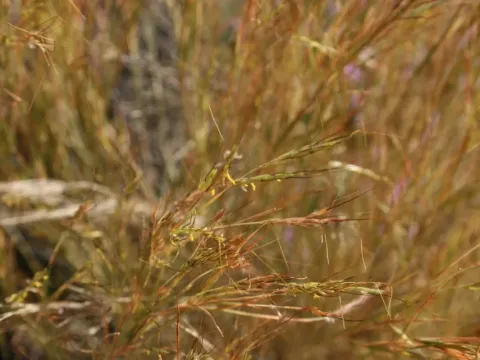
Aegilops speltoides
Aegilops speltoides
Aegilops speltoides is a wild annual grass belonging to the Poaceae family. While not cultivated as a primary food crop, it serves as an invaluable genetic resource for the improvement of commercial wheat varieties.
What the section contains
Aegilops speltoides
The plant follows a lifecycle typical of winter annuals in its native range, germinating in the autumn and establishing a root system before the onset of winter dormancy. This strategy allows it to utilize early spring moisture effectively.
Growth resumes rapidly in the spring, with the plant entering the tillering and jointing phases. The rapid development ensures the completion of its lifecycle before the intense summer heat of the Mediterranean and Near East regions.
Flowering usually occurs in late spring, characterized by spikelets that are highly efficient at cross-pollination. This biology is crucial for maintaining genetic diversity within wild populations.
In research settings, sowing is conducted under controlled conditions to preserve germplasm. Breeders carefully monitor development stages to synchronize the flowering time with commercial wheat lines for cross-breeding experiments.
This species is exceptionally well-adapted to harsh environmental conditions, often thriving in arid and semi-arid landscapes. It tolerates poor, rocky, and calcareous soils where many other plants fail to grow.
The plant exhibits high drought tolerance, supported by a deep and extensive root system capable of accessing subsurface water. It thrives in well-drained habitats and avoids areas with stagnant water.
As a heliophyte, Aegilops speltoides requires full exposure to sunlight for optimal development. It is rarely found in shaded areas, as its competitive ability decreases significantly in dense vegetation.
It shows remarkable resilience to thermal stress, enduring both cold winters and hot, dry summers in its native habitats. This adaptability makes it a priority species for studying heat and drought tolerance.
The species does not require intensive fertilization. It is naturally equipped to extract nutrients from depleted soils, reflecting its long evolutionary history in diverse environments.
Aegilops speltoides is not harvested for commercial grain production due to its low yields and the brittle nature of its rachis. The seeds shatter easily upon maturity, which is a natural mechanism for dispersal.
The primary value of this plant lies in its genetic contribution to wheat breeding. It contains essential genes for disease resistance, grain quality, and abiotic stress tolerance that have been lost during domestication.
In experimental plots, researchers measure grain characteristics such as protein content and structural proteins. These studies help identify specific markers useful for marker-assisted selection in bread wheat programs.
Harvesting, when performed for research purposes, requires precise timing to prevent seed loss due to the fragile spike structure. Seeds are typically collected by hand and stored in gene banks.
The yield of offspring derived from crosses between wheat and Aegilops speltoides is the focus of extensive scientific study. These hybrids often demonstrate enhanced robustness compared to standard wheat cultivars.
The species is highly resistant to many fungal pathogens that plague modern wheat, including various types of rust and powdery mildew. Its robust immune system is a result of millions of years of natural selection.
While the plant is tough, it can be susceptible to generalist insect pests, such as aphids. However, the density of leaf hairs and the physical structure of the plant often provide sufficient mechanical protection.
Root diseases are rarely a problem due to the plant's preference for well-drained, aerated soils. It has successfully co-evolved with local microflora, maintaining a balanced relationship.
Competition from more aggressive, nutrient-demanding vegetation is the primary limiting factor for its population density. In agricultural fields, it is often treated as a weed and controlled using systemic herbicides.
Conservation efforts are critical, as the loss of natural habitats poses a threat to the genetic diversity of this species. Protecting wild populations is essential for the future security of global wheat supplies.